A standard ten-second heart trace holds hidden data that could predict when a patient will die, but clinics are not equipped to read it.
For decades, the electrocardiogram has been a basic triage tool. It tells doctors if a heart is beating normally right now. But it misses the quiet, microscopic signatures of future systemic failure.
The invisible signal
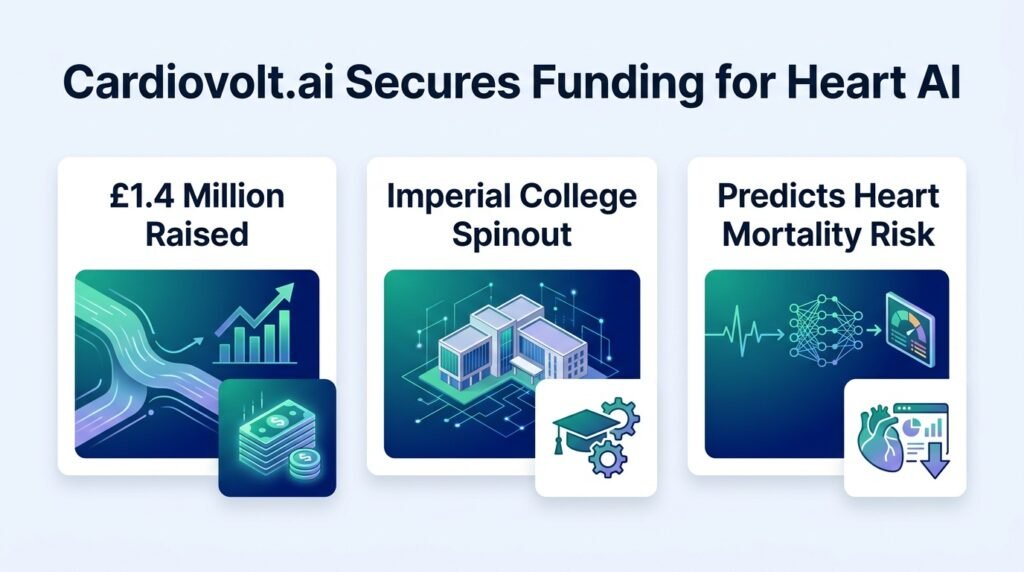
A new spinout, Cardiovolt.ai, just raised £1.4 million to commercialize deep learning models that read between the lines of these common tests. Trained on millions of global records, its AIRE model does not just look for active heart attacks. It detects subtle waveform patterns to flag hidden heart conditions, diabetes, and chronic kidney disease.
Most notably, it estimates patient mortality risk from a simple ten-second trace.
This shifts the ECG from a reactive diagnostic tool to a predictive instrument. If a basic test can flag multi-organ decline years before symptoms appear, the entire structure of preventive medicine changes. It turns a cheap, ubiquitous test into a powerful screening mechanism.
The implementation gap
But reading data is easier than changing clinical habits. The company wants these tools integrated into NHS hospital workflows within five years.
That timeline is highly ambitious. Hospital IT systems are notoriously fragmented. Clinicians are already exhausted by alert fatigue. If an AI flags a high mortality risk on a routine ECG, what is the exact clinical pathway? Doctors cannot easily treat a vague statistical warning without clear, actionable protocols.
The technology is ready to see the invisible. The harder test is whether healthcare systems can handle what it finds.