A massive consolidation in cancer diagnostics reveals the steep financial price of dominating the liquid biopsy market.
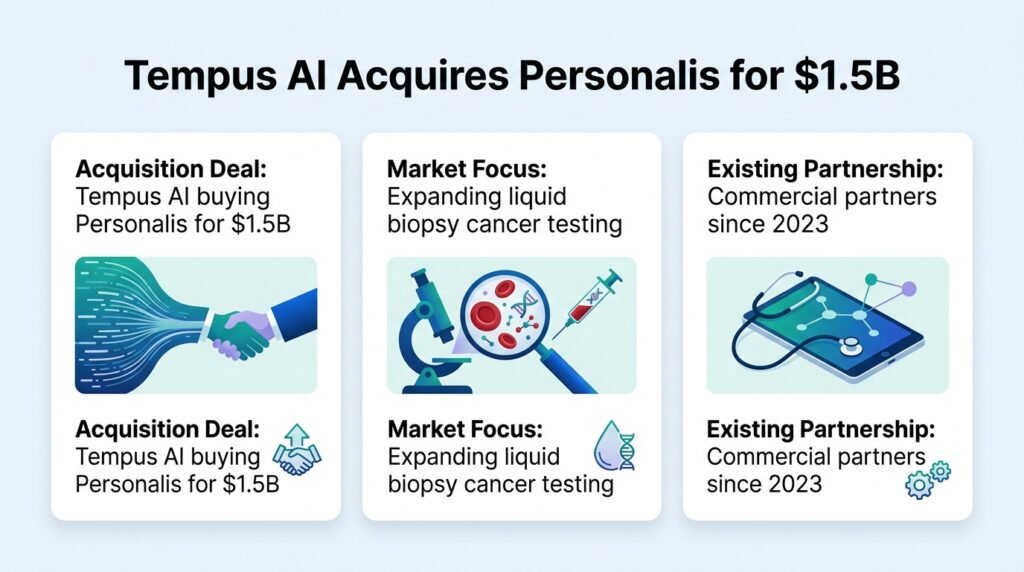
Tempus AI is doubling down on the hunt for leftover cancer cells. By acquiring its long-term partner Personalis in a $1.5 billion all-stock deal, the company wants to own the technology that spots minimal residual disease. This diagnostic frontier is highly lucrative but incredibly expensive to build from scratch.
But Wall Street is not entirely sold on the math.
The Cash Burn
Following the announcement, Tempus shares dropped over 8 percent. Investors are staring directly at Personalis’s ongoing cash burn. Buying growth in diagnostics is a high-risk strategy. While the deal secures proprietary testing tech, it also saddles Tempus with heavy operational costs before the market fully matures.
This is a classic land grab. The race to dominate blood-based cancer testing is forcing companies to consolidate early. Tempus has partnered with Personalis since 2023, but commercial agreements are no longer enough to secure a competitive moat.
The Integration Risk
If the deal closes in late 2026 or early 2027, Tempus will control the entire pipeline from clinical data to active patient monitoring. This integration could make cancer tracking more seamless. However, the immediate future requires absorbing a high-burn business during a volatile market. The acquisition proves that diagnostic data alone is no longer enough to win. To lead in precision medicine, platforms must own the physical testing infrastructure, even if it hurts their balance sheets today.