
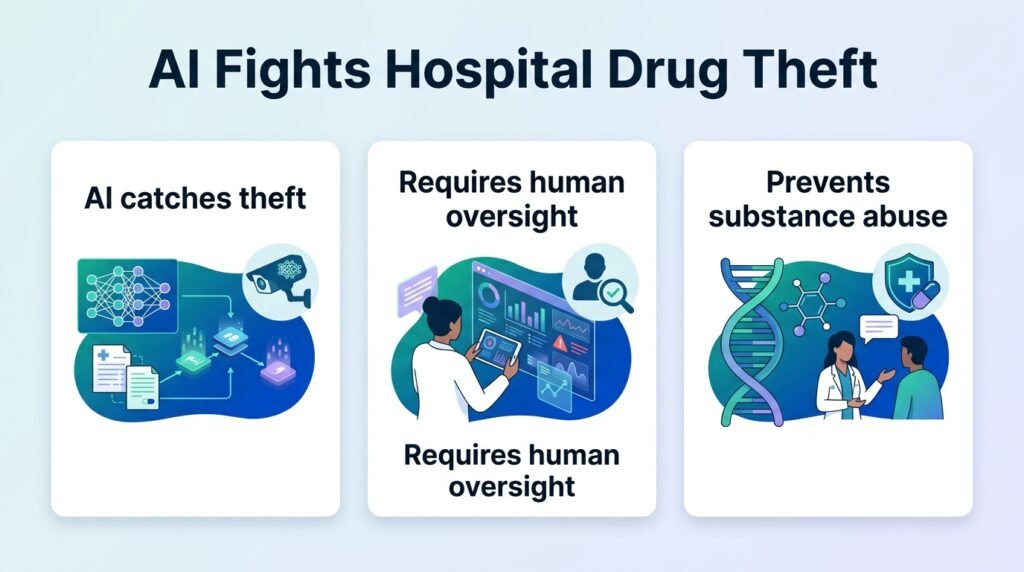
Hospitals are buying artificial intelligence to catch staff stealing narcotics, but the technology is useless without human skepticism.
An algorithm can flag a suspicious transaction in milliseconds. Yet, in one high-profile Tennessee case, a nurse managed to steal fentanyl for months despite an AI-powered monitoring system running in the background.
This failure exposes a dangerous misunderstanding of machine learning in clinical settings. Algorithms do not stop theft. They only generate alerts.
The human bottleneck
Currently, only 37.5% of healthcare organizations use AI to track controlled substances. The rest still rely on slow, manual audits.
For the minority using advanced software, these tools analyze vast transactional data to spot anomalies. They flag discrepancies that human eyes would miss. But an alert is just noise if hospital administrators fail to investigate.
When clinical leaders treat AI as a set-it-and-forget-it solution, they create a false sense of security. Software cannot replace clinical judgment, robust staff reporting, or the difficult work of confronting a colleague.
The cost of trust
The stakes of this complacency are incredibly high. When addicted staff divert drugs, patients receive diluted doses or no pain relief at all.
Beyond the immediate danger to patient safety, hospitals face massive reputational damage and severe regulatory penalties. Major medical centers have previously faced multi-million dollar fines for missing inventory records.
AI is a diagnostic tool for operational risk, not a cure. If hospitals do not invest in the human infrastructure to act on these digital warnings, the software is just an expensive alarm that everyone ignores.