
As artificial intelligence slashes administrative burdens for doctors, a quiet battle is brewing over who actually owns the financial upside of this new efficiency.
For years, health systems pitched AI as the cure for clinical burnout. Automated scribes and intake tools promised to give doctors their lives back.
But now that the technology is actually working, physicians are asking a pointed question. If they can see more patients in less time, why should administrators pocket all the savings?
The Productivity Dividend
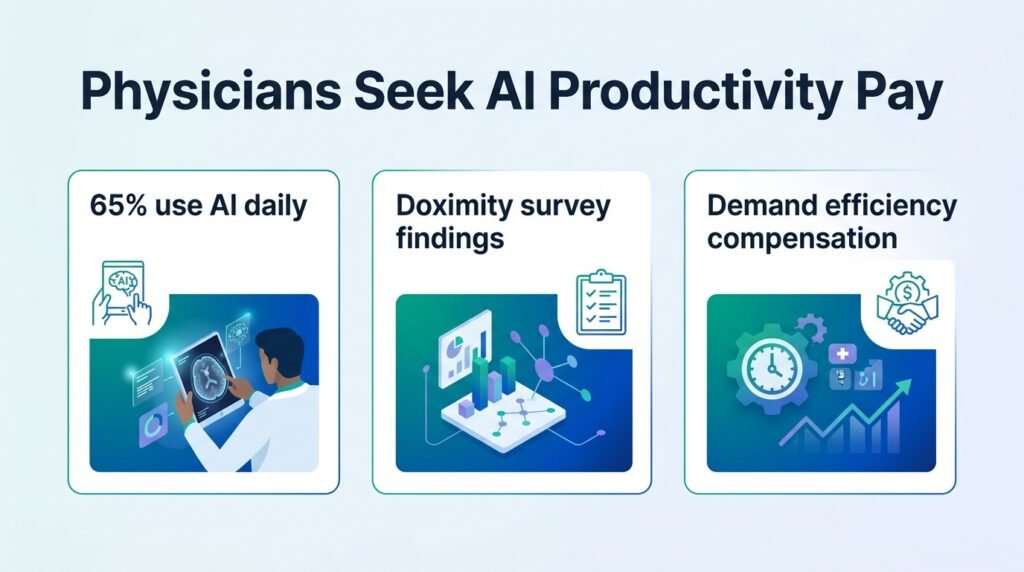
Over 65 percent of physicians now use AI daily or weekly. They are not just using it to survive the workday. They are using it to lobby for raises.
Nearly one-quarter of doctors expect AI to boost their compensation within the next year. Furthermore, 67 percent believe staying current with AI tools gives them a competitive earnings edge.
This is a massive shift in bargaining power. With over 80 percent of doctors reporting chronic overwork and nearly half considering quitting, hospitals cannot afford to lose staff. AI proficiency is no longer a niche skill. It is becoming a core salary negotiation tool.
The Valuation Trap
But this transition will not be smooth. Health systems facing tight margins will likely argue that the technology, which they paid for, drove the efficiency gains.
If administrators try to pocket the entire surplus, they risk alienating a workforce that is already halfway out the door. The real test is whether hospitals will view AI as a tool to squeeze more labor out of doctors, or as a way to fairly reward them for working smarter.