
Hospitals and doctors are stepping into a legal minefield as AI moves from administrative assistant to diagnostic co-pilot.
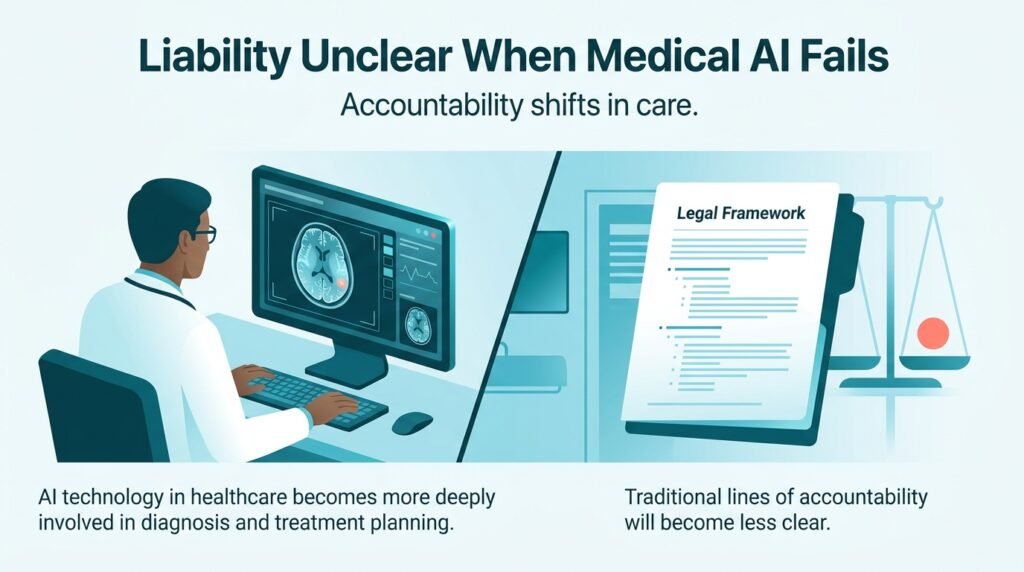
For decades, medical malpractice law relied on a simple rule: the doctor makes the final call, so the doctor carries the liability. But as algorithms dictate treatment plans and spot tumors, that clear line of accountability is dissolving.
The Liability Shift
Clinicians now face a double-edged sword. If they ignore an AI recommendation and the patient suffers, they risk being sued for deviating from the modern standard of care. Yet, if they blindly trust a flawed algorithmic output that causes patient harm, they remain the primary target for malpractice lawsuits.
This dynamic is shifting. Recent legal actions, including class-action lawsuits over algorithmic insurance denials, are pushing courts to view clinical software not just as a tool, but as a defective product.
A Regulatory Split
The regulatory response is highly fragmented. While the European Union is easing the burden of proof for patients harmed by software through its updated Product Liability Directive, other jurisdictions still lack clear statutory frameworks. This leaves hospitals to navigate a patchwork of state-level rulings and evolving product liability doctrines.
The practical takeaway is clear. Healthcare organizations cannot treat AI procurement as a simple IT purchase. Until courts establish clear boundaries, institutions must draft strict risk-sharing agreements with software vendors to avoid absorbing the entire liability burden alone.