
Billions of dollars in virtual kidney care platforms are failing to slow disease progression or cut healthcare spending.
For years, digital health platforms promised to reshape chronic kidney disease management. They secured massive contracts with Medicare Advantage and managed billions in venture capital. But a rigorous analysis of these virtual solutions reveals a stark reality. They do not stop patients from getting sicker, and they do not save money.
The cost of flatlining
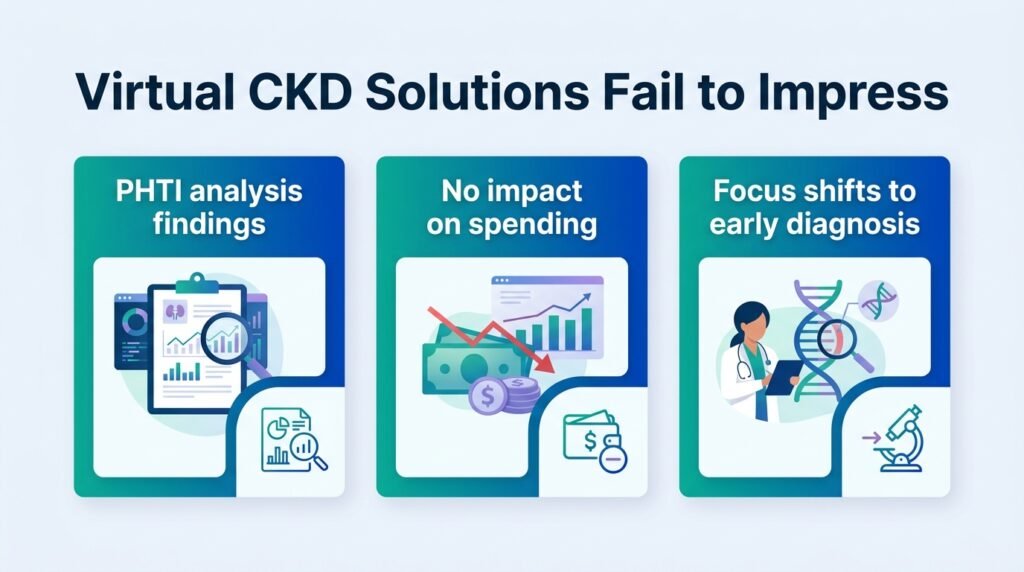
An evaluation of eight major commercial platforms found that these digital interventions reduced overall spending by a mere 0.1 percent. Even worse, they showed no consistent impact on slowing kidney function decline. They also failed to increase the adoption of guideline-recommended medications, such as SGLT2 inhibitors, which are proven to delay organ failure.
Instead of keeping patients healthy, these platforms primarily excel at preparing them for the end stage. The data shows a 12.4-percentage-point increase in optimal, planned outpatient dialysis starts.
That is a logistical win, not a clinical victory.
A misaligned strategy
This mismatch highlights a fundamental flaw in the current digital health playbook. Intervening late in the disease cycle with high-tech monitoring does not replace early clinical action. Managing the transition to dialysis is useful, but the real goal must be avoiding dialysis altogether.
Insurers and providers need to shift their focus. Rather than funding expensive virtual management suites, resources should go toward earlier diagnosis and the prescribing of affordable, generic drugs.
The lesson is clear. Digital tools cannot coach their way out of late-stage organ failure. True value lies in early prevention, not digitized crisis management.