⚡ Quick Summary
This study investigates the use of deep learning models for diagnosing proptosis through orbital magnetic resonance imaging (MRI). The DenseNet121 model achieved remarkable performance with a mean accuracy of 95.0% and an AUC of 0.986, highlighting the potential of AI in enhancing diagnostic accuracy.
🔍 Key Details
- 📊 Dataset: 521 participants (261 with proptosis, 260 controls)
- 🧩 Features used: Volumetric orbital MRI data
- ⚙️ Technology: Deep learning models (DenseNet121, DenseNet169, DenseNet264, ResNet50)
- 🏆 Performance: DenseNet121: Mean accuracy 95.0%, AUC 0.986, Sensitivity 92.7%, Specificity 96.9%
🔑 Key Takeaways
- 🤖 Deep learning offers a promising approach for automated diagnosis of proptosis.
- 📈 DenseNet121 outperformed other models in diagnostic accuracy.
- 🔍 Study utilized a large dataset of MRI examinations for robust analysis.
- 📊 High sensitivity (92.7%) and specificity (96.9%) indicate reliable model performance.
- 🌐 Focus on volumetric MRI data represents a novel approach in orbital imaging.
- 💡 Emphasis on explainable model interpretation enhances clinical applicability.
- 🏥 Study conducted at a single center, paving the way for future multi-center trials.
- 🆔 PMID: 41999029
📚 Background
Proptosis, or the protrusion of the eye, is a common symptom of various orbital diseases. Traditional diagnostic methods, such as the Hertel exophthalmometer, often suffer from observer dependency and lack reproducibility. As a result, there is a growing need for more objective and automated diagnostic tools that can enhance the accuracy and reliability of proptosis assessments.
🗒️ Study
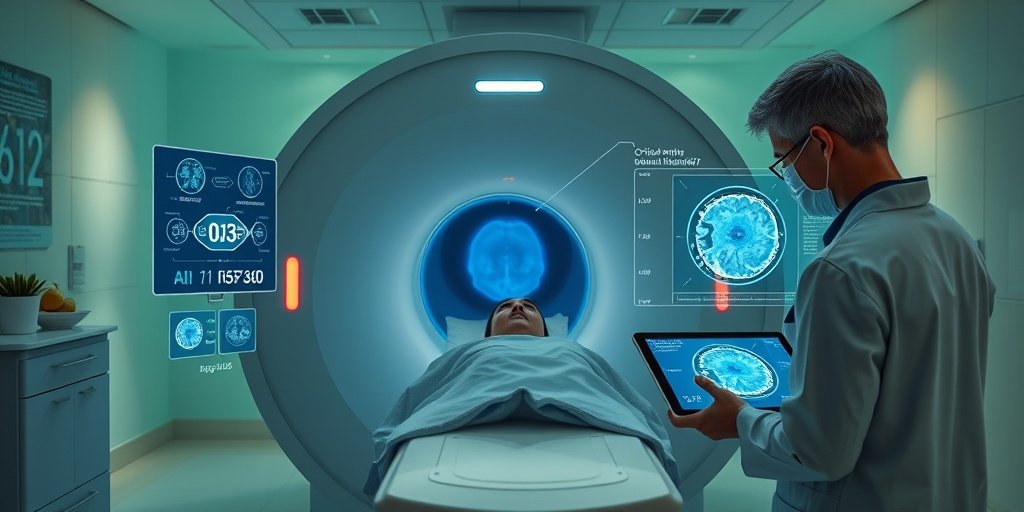
This retrospective study analyzed orbital MRI examinations from 521 participants, including 261 individuals diagnosed with proptosis and 260 control subjects. The researchers employed a 3D convolutional neural network framework, training various models (DenseNet121, DenseNet169, DenseNet264, and ResNet50) on the volumetric MRI data to automate the detection of proptosis.
📈 Results
The DenseNet121 model emerged as the most effective, achieving a mean accuracy of 95.0%, an AUC of 0.986, a sensitivity of 92.7%, and a specificity of 96.9% during 5-fold cross-validation. These results underscore the model’s potential for accurate and reliable proptosis diagnosis.
🌍 Impact and Implications
The findings of this study could significantly impact the field of ophthalmology and radiology by providing a more automated and objective method for diagnosing proptosis. By leveraging deep learning technologies, healthcare professionals can enhance diagnostic accuracy, leading to better patient outcomes and more efficient clinical workflows. This research opens the door for further exploration of AI applications in medical imaging.
🔮 Conclusion
This study highlights the transformative potential of deep learning in medical diagnostics, particularly in the context of proptosis detection through MRI. The impressive performance of the DenseNet121 model suggests that AI can play a crucial role in improving diagnostic processes, paving the way for future advancements in automated imaging analysis. Continued research in this area is essential for realizing the full benefits of AI in healthcare.
💬 Your comments
What are your thoughts on the integration of deep learning in medical diagnostics? We would love to hear your insights! 💬 Share your comments below or connect with us on social media:
Use of Deep Learning Models in the Diagnosis of Proptosis Through Orbital Magnetic Resonance Imaging.
Abstract
BACKGROUND Proptosis is a common manifestation of orbital disease; however, current diagnostic tools, such as the Hertel exophthalmometer and manual radiological measurements, have limited reproducibility and are observer-dependent. More objective, automated approaches are needed. In this single-center retrospective study, orbital magnetic resonance imaging (MRI) examinations from 521 participants (261 with proptosis, 260 controls) were analyzed. Proptosis was defined on MRI using interzygomatic line-based distance criteria. Three-dimensional convolutional neural network models based on DenseNet121, DenseNet169, DenseNet264, and ResNet50 architectures were trained on volumetric orbital MRI data. MATERIAL AND METHODS Data were divided into training, validation, and test sets, and 5-fold cross-validation with early stopping was used to optimize and validate model performance. Diagnostic performance was assessed using accuracy, area under the receiver operating characteristic curve (AUC), sensitivity, and specificity. RESULTS DenseNet121 achieved the best overall performance, with mean accuracy of 95.0%, AUC of 0.986, sensitivity of 92.7%, and specificity of 96.9% across 5-fold cross-validation. CONCLUSIONS To the best of our knowledge, prior artificial intelligence studies in orbital imaging have primarily focused on CT-based measurements, radiomics approaches, or thyroid-associated orbitopathy assessment rather than end-to-end 3-dimensional deep learning analysis of orbital MRI volumes. In this context, the present study explores a volumetric MRI-based deep learning framework for automated proptosis detection, emphasizing patient-level classification and explainable model interpretation.
Author: [‘Kesimal U’, ‘Akkaya HE’, ‘Polat Ö’, ‘Sağlam M’]
Journal: Med Sci Monit
Citation: Kesimal U, et al. Use of Deep Learning Models in the Diagnosis of Proptosis Through Orbital Magnetic Resonance Imaging. Use of Deep Learning Models in the Diagnosis of Proptosis Through Orbital Magnetic Resonance Imaging. 2026; 32:e951157. doi: 10.12659/MSM.951157