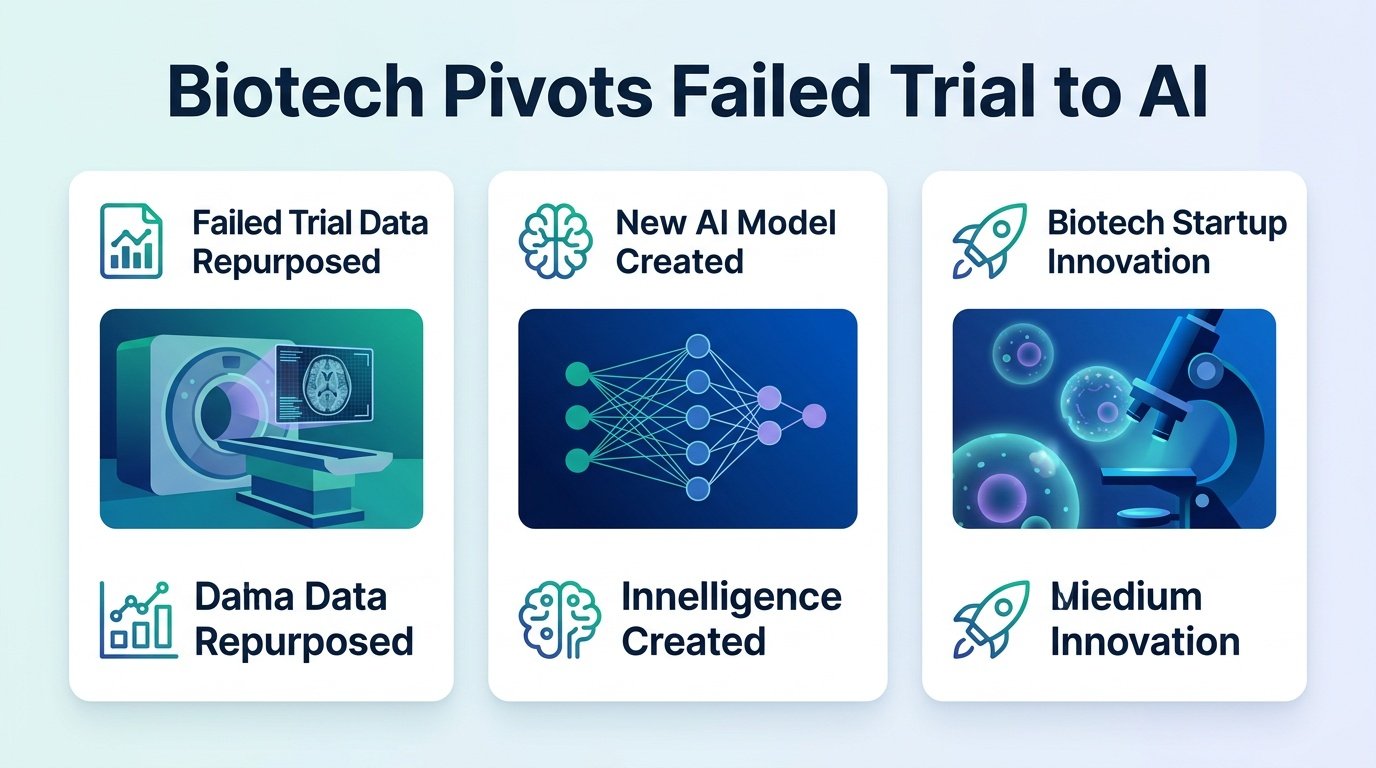
Biotech companies are finding a second life for failed drug data, but recycling bad trials into predictive algorithms carries hidden risks.
The Salvage Mission
When a clinical trial fails, millions of dollars usually vanish. For years, the industry standard was to bury the data and move on. Now, a new playbook is emerging.
After the late-2025 failure of its eye disease drug KPI-012, KALA BIO repurposed its clinical data to launch an AI platform called Researgency. Instead of shutting down, they pivoted to selling predictive infrastructure to other firms.
It is a clever financial survival tactic. By treating failed clinical trials as training data, distressed biotechs can salvage value from their most expensive mistakes.
Garbage In, Garbage Out
The business case is obvious. R&D bottlenecks are crippling, and historical trial failures contain millions of data points. Proponents argue that machine learning can find the subtle signals humans missed in those failures.
But this strategy assumes the original data is worth saving.
Critics rightly caution that relying on flawed or limited trial datasets risks scaling existing clinical errors. If a trial failed because of poor patient selection or flawed endpoints, training an AI on that data simply codifies those mistakes.
The industry must ask a hard question. Are we training the next generation of drug discovery models on actual biology, or just on the systemic errors of past research? Salvaging value is smart corporate strategy, but it is not a guaranteed shortcut to scientific truth.