

When a major medical supplier loses control of its patient databases, the failure rarely starts in its own server room.
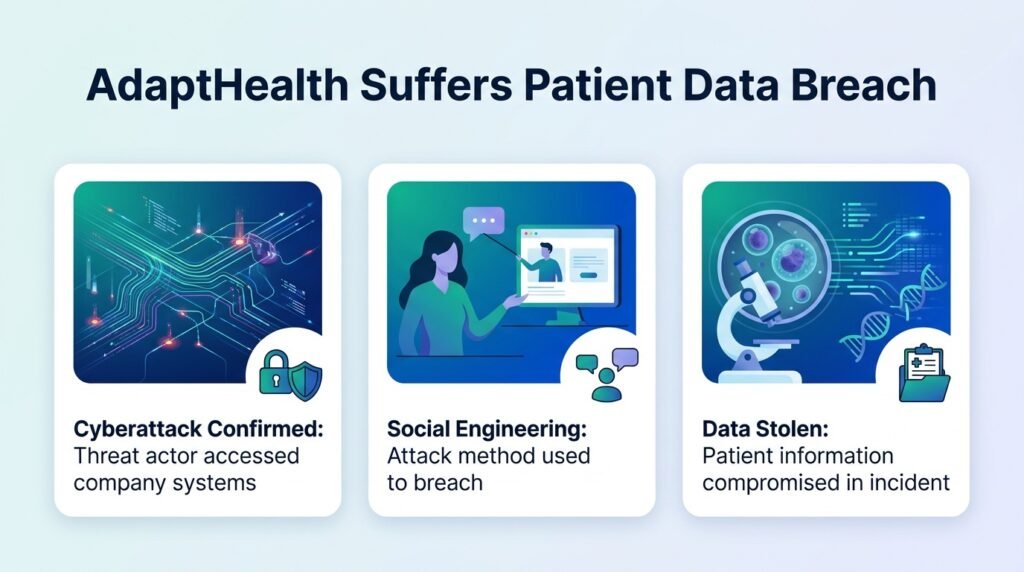
The recent data breach at AdaptHealth exposes a structural weakness in modern healthcare security. Hackers did not breach the company’s main defenses directly. Instead, they used a simple social engineering attack to steal credentials from a third-party contractor.
This side-door entry gave attackers access to cloud-based systems and internal patient databases.
The Real Target
Cybercriminals are shifting their focus. While Social Security numbers and financial accounts remained secure in this breach, the attackers walked away with patient information and insurance billing passwords.
This is not just a privacy issue. It is an operational threat.
Billing passwords allow bad actors to submit fraudulent claims, access medical records, or disrupt cash flow. For a company like AdaptHealth, which supplies medical devices to millions, the financial fallout was immediate. Its stock fell by approximately 7% following the disclosure.
The Contractor Problem
The incident highlights a growing trend of supply-chain cyberattacks targeting the medtech sector. Extortion groups, such as ShinyHunters, increasingly target external contractor networks to bypass robust corporate firewalls.
This vulnerability is systemic. Medtech companies rely on vast networks of logistics partners, billing assistants, and IT contractors. Each connection is a potential entry point.
If a contractor has access to your patient data, their security posture is your security posture. Zero-trust architecture is no longer optional. Security teams must assume that contractor credentials will be compromised and restrict access accordingly.