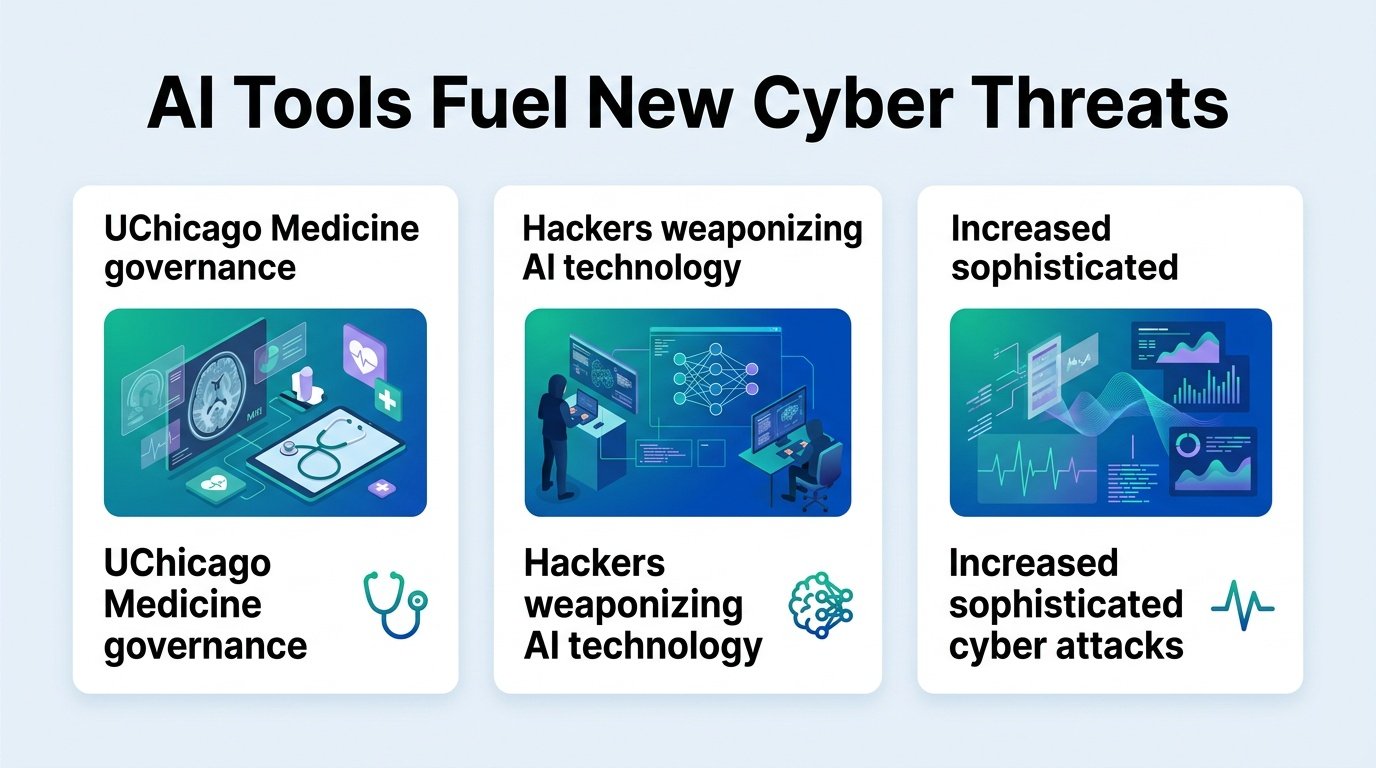
Healthcare is learning a brutal lesson: the artificial intelligence deployed to save lives is the exact same tool hackers are using to endanger them.
The threat has shifted from theoretical digital mischief to an active operational crisis. Hackers and nation-states are now deploying autonomous ransomware and highly sophisticated AI-enabled phishing to breach hospital defenses.
This is no longer just about stolen medical records or compromised credit cards.
A patient safety crisis
When ransomware locks down a hospital, patient care stops. Security researchers have already identified the first fully autonomous ransomware attack executed entirely by an AI agent. The FBI now identifies healthcare as the most targeted sector for ransomware.
Recovery from these breaches takes an average of 279 days. During that time, ambulances are diverted, surgeries are postponed, and critical monitoring systems go dark.
This is why over half of healthcare leaders now view these digital disruptions as direct, life-threatening safety emergencies. The line between cyber security and patient care has completely dissolved.
Defending the digital ward
To survive, health systems are forced to build complex governance structures to manage this dual-use risk. Institutions like the University of Chicago Medicine are trying to map out where AI is vulnerable before attackers exploit it.
But defending a hospital is inherently harder than attacking it. While administrators must secure thousands of connected medical devices, an AI-driven attacker only needs to find one weak link.
The industry must stop treating cybersecurity as an IT problem. It is now a core clinical risk.