Forcing human doctors to oversee clinical artificial intelligence might actually make medicine less safe.
Medical consensus insists that AI must remain a subordinate tool. The prevailing wisdom dictates that a human physician must always sign off on algorithmic recommendations. But this safety net might actually be a tripwire.
The assumption that a human-AI hybrid team is always superior to a machine working alone is facing a quiet collapse. New analysis suggests that forcing a doctor into the loop can actively degrade clinical accuracy.
The Deskilling Trap
When doctors constantly second-guess or passively rely on algorithms, two distinct failures occur. Human bias corrupts the machine’s precise data processing. Simultaneously, clinicians suffer from AI-induced deskilling, slowly losing the cognitive sharpness required to diagnose patients independently.
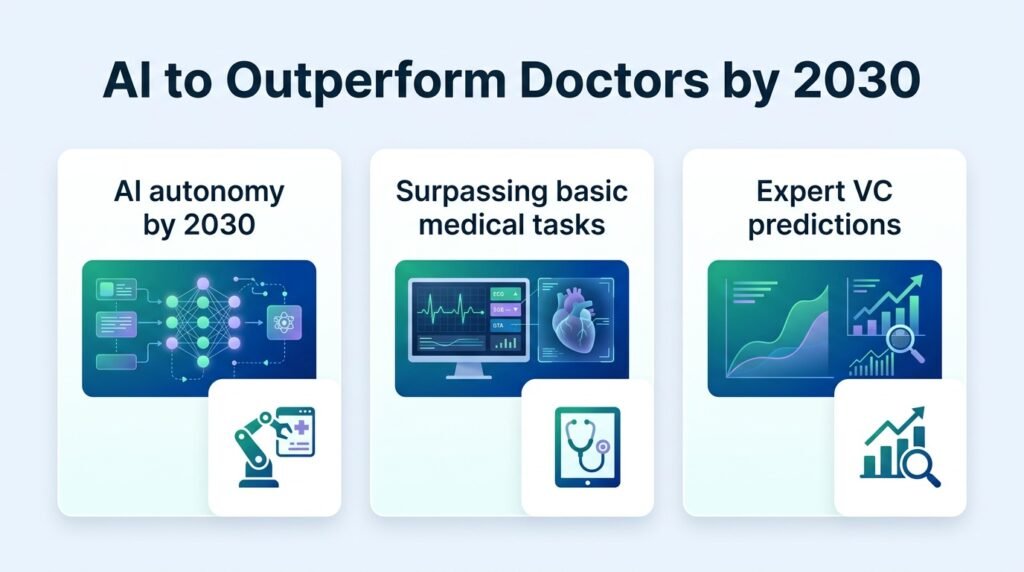
By 2030, autonomous AI is projected to outperform both solo doctors and human-AI hybrid teams at basic clinical tasks. The transition from assistant to autonomous practitioner is accelerating faster than regulators can adapt.
A Shift in Trust
This is no longer just a debate among tech investors and bioethicists. Public trust is shifting away from traditional gatekeepers. Nearly half of global consumers now believe an AI-fluent patient could perform at least one medical task as well as a doctor.
The medical establishment continues to lobby for strict oversight to protect its turf. Yet, clinging to the human-in-the-loop model out of professional comfort may ultimately harm patient outcomes. If the data proves the machine is safer alone, keeping the doctor involved becomes the real liability.