The UK’s push for a unified health database promises massive savings but triggers a high-stakes battle over patient privacy and political control.
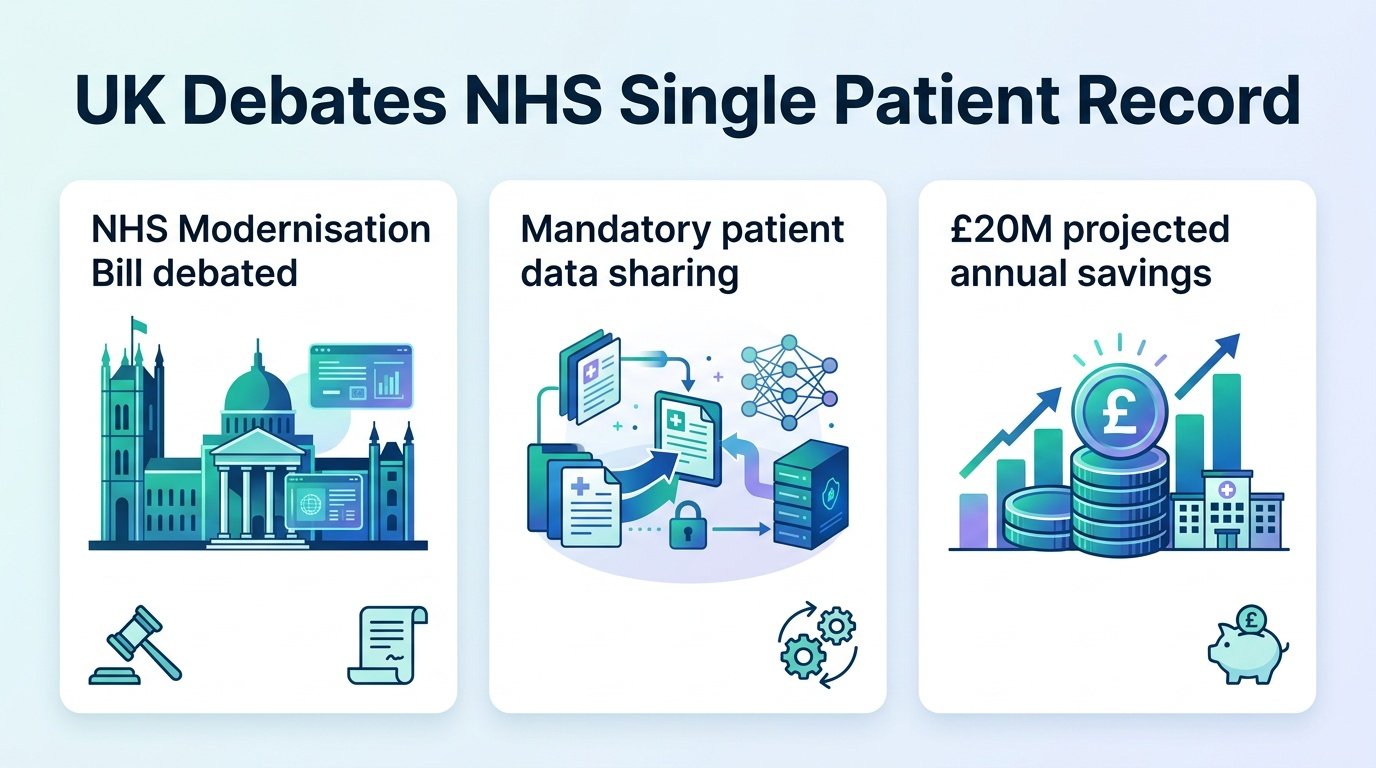
The NHS Modernisation Bill aims to legally force healthcare providers to share data. The goal is a Single Patient Record.
Proponents point to a clear fiscal upside. The government projects the move will save the NHS over £20 million annually by reducing duplicated tests and clinical errors. Fragmented care is indeed a quiet killer in modern medicine.
But the financial math hides a deeper, more troubling structural shift.
Power to the State
The legislation does not just merge databases. It proposes abolishing NHS England to centralize control directly under the Health Secretary.
This is a political consolidation masked as a technical upgrade. The Health Secretary would gain unprecedented powers to compel data sharing and fine non-compliant providers.
This centralization has triggered fierce resistance from those on the front lines.
The Trust Deficit
The British Medical Association and privacy advocates warn that the plan compromises patient-doctor confidentiality. If patients fear their data is insecure, they may withhold vital health information from their doctors.
A centralized database is also a high-value target for cybercriminals. One major breach could collapse public trust in the entire state-run healthcare system.
Efficiency cannot come at the expense of consent. The government must prove it can secure the data before it demands total control over it.