
Getting a prescription for the world’s most sought-after weight-loss drugs has devolved into a frictionless, five-minute checkout process.
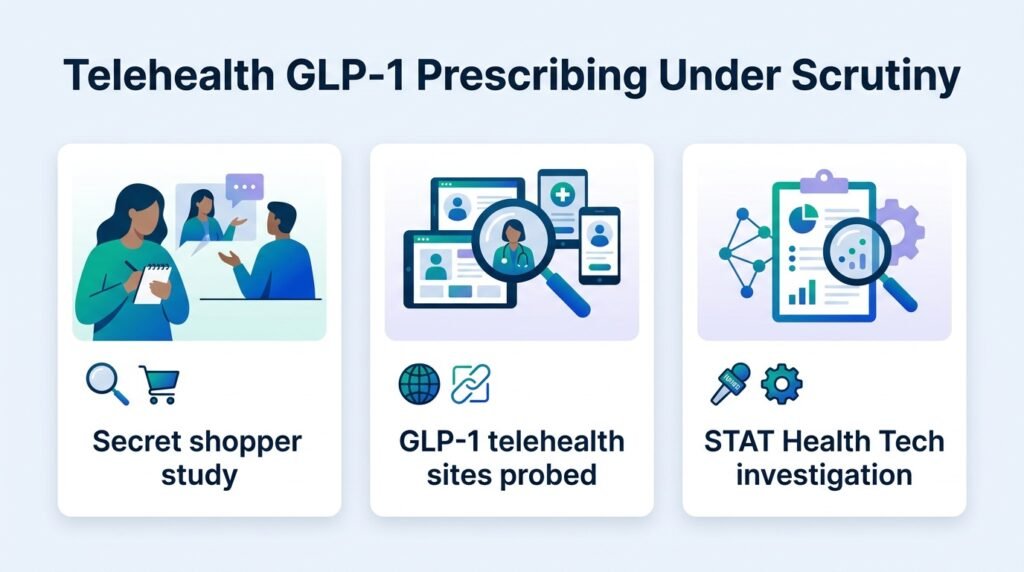
The promise of digital health was supposed to be expanded access, not the total abandonment of clinical oversight. Yet, a secret shopper investigation of forty-nine telehealth platforms reveals that nearly 92 percent gladly issued GLP-1 prescriptions.
More alarming is how they did it.
The five-minute prescription
Over two-thirds of these platforms authorized prescriptions without any real-time interaction with a clinician. Patients simply filled out online forms. In some cases, approval took less than five minutes.
This is not healthcare. It is automated retail.
Some platforms even automatically billed and shipped compounded formulations without waiting for final patient confirmation. By removing the doctor from the loop, these platforms have turned high-risk, chronic-disease management into a subscription e-commerce model.
The safety vacuum
This frictionless pipeline exposes patients to significant health risks. GLP-1s require careful screening for contraindications like thyroid cancer or pancreatitis. They demand active monitoring for severe gastrointestinal side effects.
An algorithm reading a self-reported web form cannot palpate a thyroid or gauge a patient’s psychological readiness.
The defense from industry advocates is familiar: virtual platforms expand access for underserved populations. But access to medication without access to care is a dangerous compromise. As regulatory scrutiny intensifies, the digital health sector faces a critical reckoning. It must decide whether it is practicing medicine or merely facilitating transactions.