 Yusuf Yesil, MD, MIS
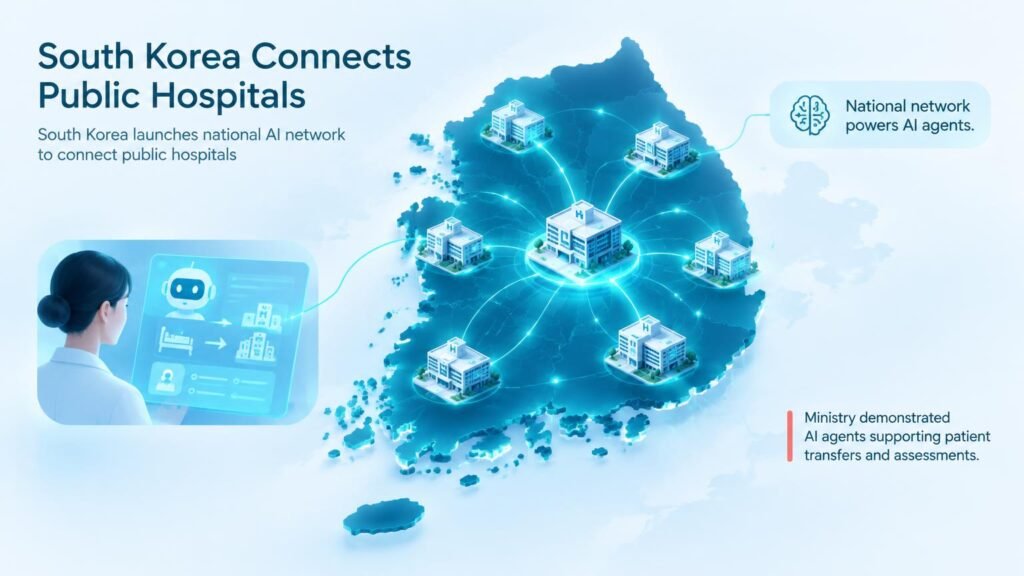
Moving a critically ill patient from a rural clinic to a regional medical center usually triggers a manual nightmare. Staff waste precious minutes printing charts, faxing records, and re-entering data. Transfer referral prep time dropped from 10 minutes to just 10 seconds when public facilities in South Korea began testing a unified AI infrastructure embedded directly within electronic medical records.
Beyond Administrative Friction
The pilot connects secondary facilities like Yeongwol Medical Center with tertiary hubs like Kangwon National University Hospital. The platform automates pre-operative assessments, discharge planning, and inter-facility handoffs.
This is an operational fix, not a clinical replacement. Automating paperwork does not add ICU beds or rural specialists, but it strips away administrative delays that compound patient risk during emergency transfers.
The Scalability Bottleneck
The initiative aims to expand from eight pilot sites to 35 by 2027, targeting all 72 public hospitals nationwide by 2029. Success hinges on data standardization across fragmented local systems. While speed gains in structured transfers are proven, the real test is whether regional centers can handle the accelerated patient flow without severe staffing bottlenecks.