Medicare Advantage plans are now turning consumer sleep data directly into clinical referrals.
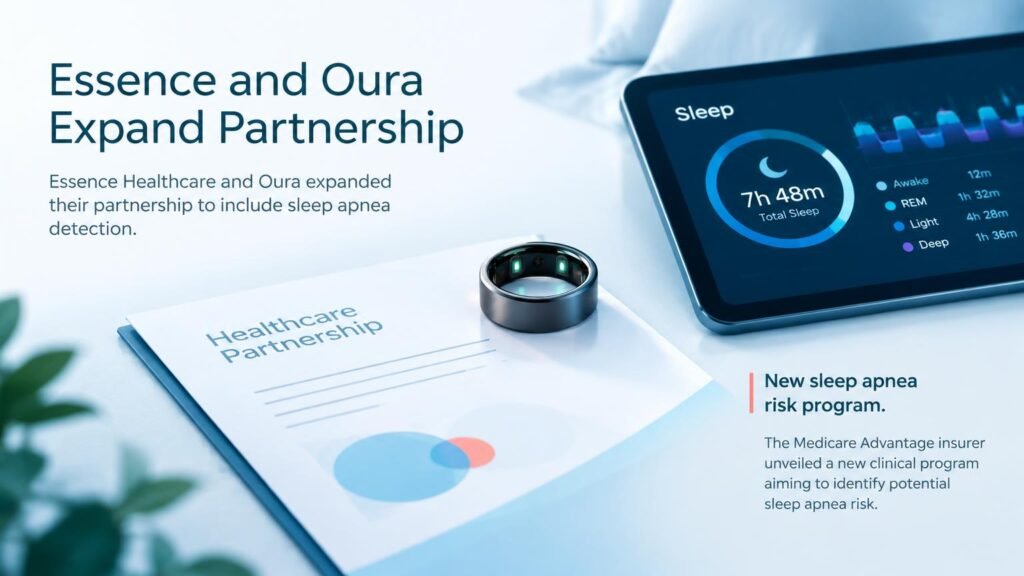
A major Medicare Advantage insurer is expanding its partnership with Oura to automatically screen seniors for sleep apnea using smart ring data. When the device detects elevated nighttime breathing disturbances, automated outreach prompts the member to complete a clinical screening questionnaire. The results flow directly to primary care physicians via Lumeris’ Tom platform.
From Consumer Gadget to Care Pipeline
This initiative bridges the long-standing gap between consumer wearables and actionable clinical workflows. Instead of relying on patients to bring raw biometric data to an appointment, the system triggers targeted outreach based on passive monitoring. It signals a shift where health plans cover wearable hardware to drive early diagnosis of chronic conditions like sleep apnea.
Early Screening Versus Definitive Diagnosis
Screening algorithms are not diagnostic tools. Increased breathing disturbances flagged by a ring indicate risk, but they do not replace a formal sleep study. The clinical outcome hinges on whether primary care physicians actually act on these automated alerts or if the influx of passive data simply adds noise to already overburdened medical practices.
Health plans must evaluate whether automated wearable triage improves long-term chronic disease management without driving unnecessary testing costs.