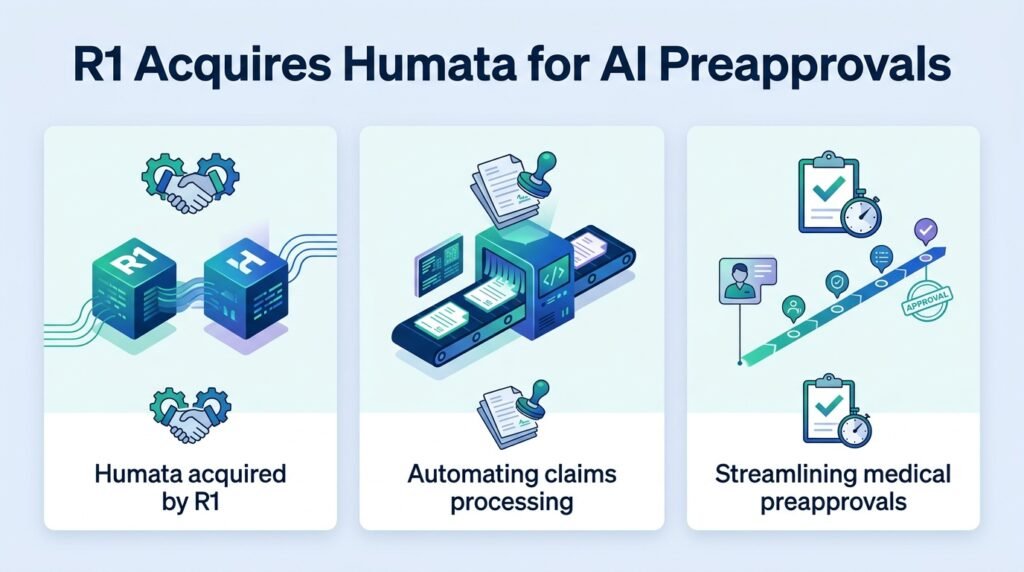
The administrative war between hospitals and insurers is moving from human negotiators to competing algorithms.
Prior authorization is the ultimate bottleneck in American healthcare. It drains clinical time, delays patient care, and drives massive administrative overhead. Now, the battleground is shifting from human negotiators to competing software.
R1 RCM is betting heavily on this shift. By acquiring Humata, the revenue cycle giant plans to embed agentic AI directly into its Phare Operating System. This is a strategic play to dominate the administrative layer of medicine.
The Algorithmic Defense
Humata brings impressive metrics to the table. The platform claims a 96% first-pass approval rate and a 30% reduction in write-offs.
By integrating this tech, R1 wants to achieve real-time claim adjudication. They are trying to bypass the traditional, agonizing weeks of back-and-forth mailings.
But look closer at the broader trend.
As insurance companies increasingly deploy automated systems to review and deny claims, hospitals are forced to fight fire with fire. This acquisition signals a transition to algorithmic billing, where software negotiates with software.
The Human Limit
Can algorithms truly resolve complex clinical nuances? While a 96% approval rate sounds definitive, the remaining 4% often represent the most complex, high-cost patient cases.
These edge cases will still require human intervention. If the AI fails to flag these nuances, hospitals risk losing millions in disputed care.
Ultimately, this acquisition proves that administrative consolidation is no longer optional. To survive payer scrutiny, health systems must automate their defense.