⚡ Quick Summary
This review highlights the transformative shift towards precision medicine in orthopaedics, integrating individual anatomical and molecular characteristics into clinical decision-making. By tailoring surgical techniques and rehabilitation strategies, precision orthopaedics aims to enhance patient outcomes and predictability.
🔍 Key Details
- 📊 Focus: Precision medicine in orthopaedics
- 🧩 Technologies discussed: Advanced imaging, robotic-assisted surgery, AI, molecular diagnostics
- ⚙️ Applications: Total knee and hip arthroplasty, trauma care, osteoarthritis diagnosis
- 🏆 Accuracy: Molecular biomarkers achieving >95% accuracy in diagnosing infections
🔑 Key Takeaways
- 🔬 Precision orthopaedics tailors interventions to individual patient profiles.
- 🤖 Robotic systems provide submillimetre accuracy in total knee arthroplasty.
- 📉 Spinopelvic analysis reduces instability risk in total hip arthroplasty.
- 🛠️ Intraoperative technologies enhance implant placement precision and reduce radiation exposure.
- 💡 AI accelerates early diagnosis of osteoarthritis.
- 📈 Molecular biomarkers like alpha-defensin offer high diagnostic accuracy for infections.
- 🏥 Personalised rehabilitation protocols are facilitated by AI-guided platforms.
- 🔗 Interdisciplinary collaboration is essential for effective integration of these technologies.
📚 Background
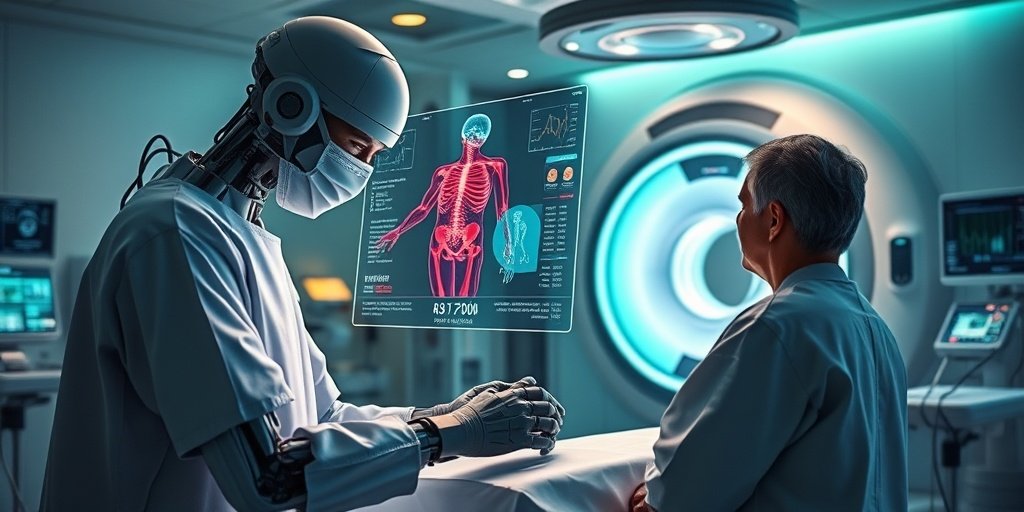
The field of orthopaedics is undergoing a significant transformation with the advent of precision medicine. Unlike traditional methods that apply uniform protocols, precision medicine focuses on the unique anatomical, biomechanical, and molecular characteristics of each patient. This approach aims to improve surgical outcomes and rehabilitation strategies, ultimately enhancing patient care.
🗒️ Study
This narrative review synthesizes current concepts and evidence supporting patient-specific care in orthopaedics. It discusses a variety of technological and biological innovations that are shaping modern orthopaedic practices across multiple subspecialties, including advanced imaging techniques, robotic-assisted surgeries, and artificial intelligence applications.
📈 Results
The review reveals that in total knee arthroplasty, personalised alignment techniques can restore native joint lines, while robotic systems execute surgical plans with submillimetre accuracy. In total hip arthroplasty, spinopelvic analysis is crucial for mitigating instability risks, particularly in patients with spinal stiffness. Furthermore, AI technologies are proving invaluable in the early diagnosis of osteoarthritis and in developing personalised rehabilitation protocols.
🌍 Impact and Implications
The implications of this shift towards precision medicine in orthopaedics are profound. By leveraging advanced technologies and individualised data, healthcare providers can deliver the right interventions at the right time, significantly improving patient outcomes. This approach not only enhances surgical precision but also optimises rehabilitation strategies, paving the way for a new era in orthopaedic care.
🔮 Conclusion
The future of orthopaedics lies in the effective integration of precision medicine tools, which are already making a significant impact in clinical settings. Continued research, validation, and interdisciplinary collaboration are essential to fully realise the potential of these innovations. As we move forward, the focus will remain on delivering tailored interventions that align with the unique needs of each patient.
💬 Your comments
What are your thoughts on the advancements in precision medicine within orthopaedics? We would love to hear your insights! 💬 Share your comments below or connect with us on social media:
Precision medicine in orthopaedics: A review of current technologies and future directions.
Abstract
PURPOSE: To synthesise the paradigm shift towards precision medicine in orthopaedics, where individual anatomical, biomechanical, molecular and kinematic characteristics are integrated into clinical decision-making. Unlike traditional approaches applying uniform protocols, this review outlines how precision orthopaedics aims to tailor surgical techniques, implant selection, component positioning and rehabilitation strategies to the unique profile of each patient, thereby improving outcomes and predictability.
METHODS: This narrative review synthesises current concepts and evidence supporting patient-specific care. The methods discussed encompass a wide range of technological and biological innovations, including advanced imaging, robotic-assisted surgery, artificial intelligence (AI), molecular diagnostics, functional assessment tools and personalised therapeutic platforms that are shaping modern orthopaedic practice across multiple subspecialties.
RESULTS: In total knee arthroplasty, personalised alignment restores native joint lines, while robotic systems execute plans with submillimetre accuracy, reducing alignment outliers and potentially improving functional outcomes. In total hip arthroplasty, spinopelvic analysis mitigates instability risk, a critical factor for patients with spinal stiffness. Intraoperative technologies like robotics, patient-specific instruments and augmented reality improve the precision of implant placement and reduce radiation exposure in trauma. Beyond arthroplasty, AI accelerates early diagnosis of osteoarthritis, while molecular biomarkers (e.g., alpha-defensin) offer >95% accuracy in diagnosing periprosthetic joint infection. Finally, AI-guided digital platforms and motion tracking are used to deliver personalised rehabilitation protocols.
CONCLUSION: Precision medicine encompasses a wide range of powerful tools, many of which are already in clinical use. However, their full and effective integration requires continued research, long-term validation, cost-effectiveness analyses and interdisciplinary collaboration. The future of orthopaedics is anchored in delivering the right intervention for the right patient at the right time, guided by robust, individualised data and sound clinical judgement.
LEVEL OF EVIDENCE: Level V.
Author: [‘Sadoghi P’, ‘Koutp A’, ‘Herbst E’, ‘Milano G’, ‘Musahl V’, ‘Hirschmann MT’]
Journal: Knee Surg Sports Traumatol Arthrosc
Citation: Sadoghi P, et al. Precision medicine in orthopaedics: A review of current technologies and future directions. Precision medicine in orthopaedics: A review of current technologies and future directions. 2025; (unknown volume):(unknown pages). doi: 10.1002/ksa.70168