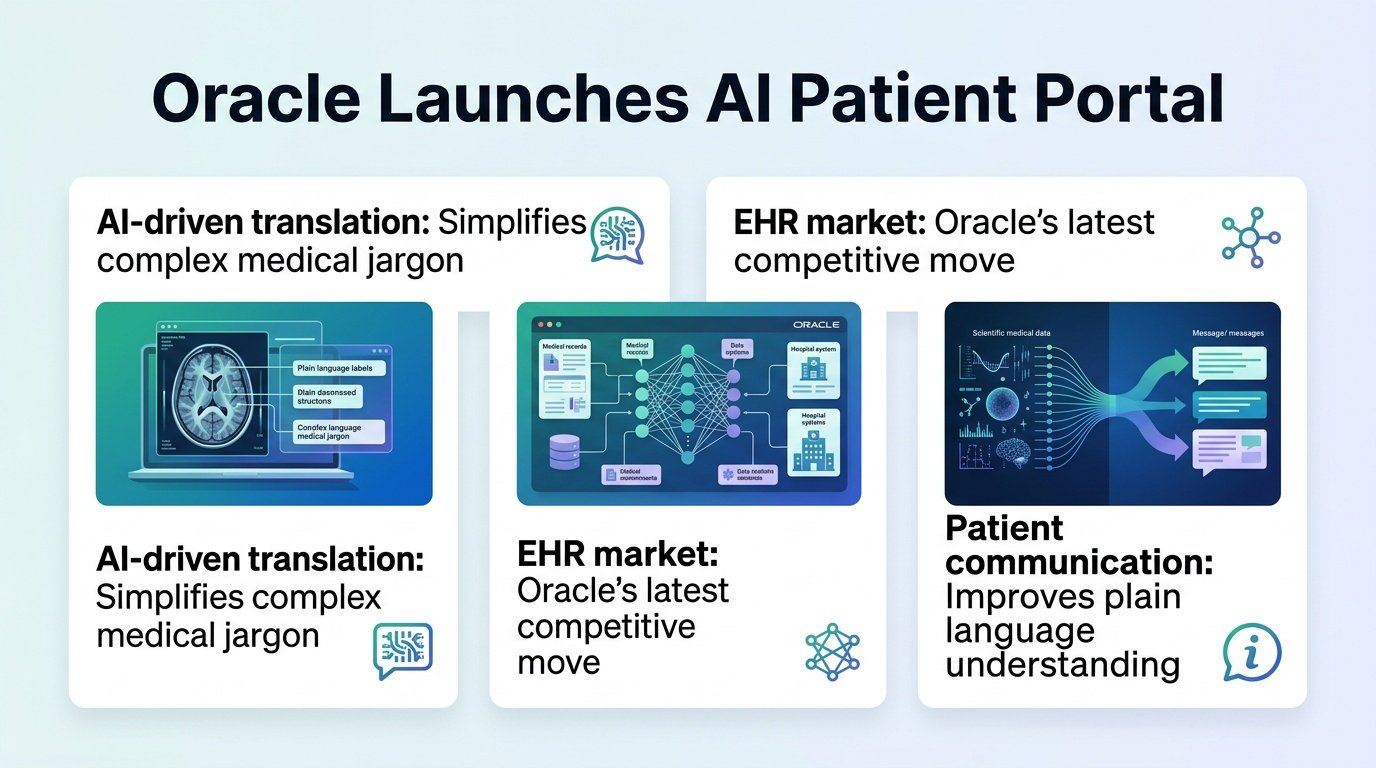
Giving patients direct access to AI-translated medical records is a bold play to win the EHR wars, but it shifts a massive cognitive burden from doctors to software.
Patient portals are notoriously dry, confusing, and largely ignored. Oracle wants to change that by embedding OpenAI’s models directly into its electronic health record (EHR) system. The goal is simple: translate complex clinical jargon into plain English. Instead of deciphering “dyspnea on exertion,” patients see “shortness of breath during exercise.”
The EHR Battleground
This is not just a patient-friendly feature. It is a strategic strike in the highly competitive EHR market. Oracle is betting that native AI integration will prevent hospital systems from migrating to rivals. By processing data natively within its secure cloud infrastructure, Oracle addresses the critical hurdle of HIPAA compliance.
But the real test lies in the software’s limits. To avoid liability, Oracle has blocked the AI from giving actual medical advice. It can translate, but it cannot prescribe or diagnose.
The Guardrail Dilemma
This restriction creates a delicate tension. A patient reading a translated report will inevitably have questions. If the AI refuses to answer to stay compliant, the patient is sent right back to the clinic’s inbox.
Rather than reducing administrative burdens, this translation layer might actually trigger a flood of follow-up messages to already overwhelmed doctors. Safe AI is necessary, but a highly restricted assistant may frustrate the very patients it aims to help. Oracle has built a slick translation tool, but the industry has yet to prove that automated clarity leads to better clinical outcomes.