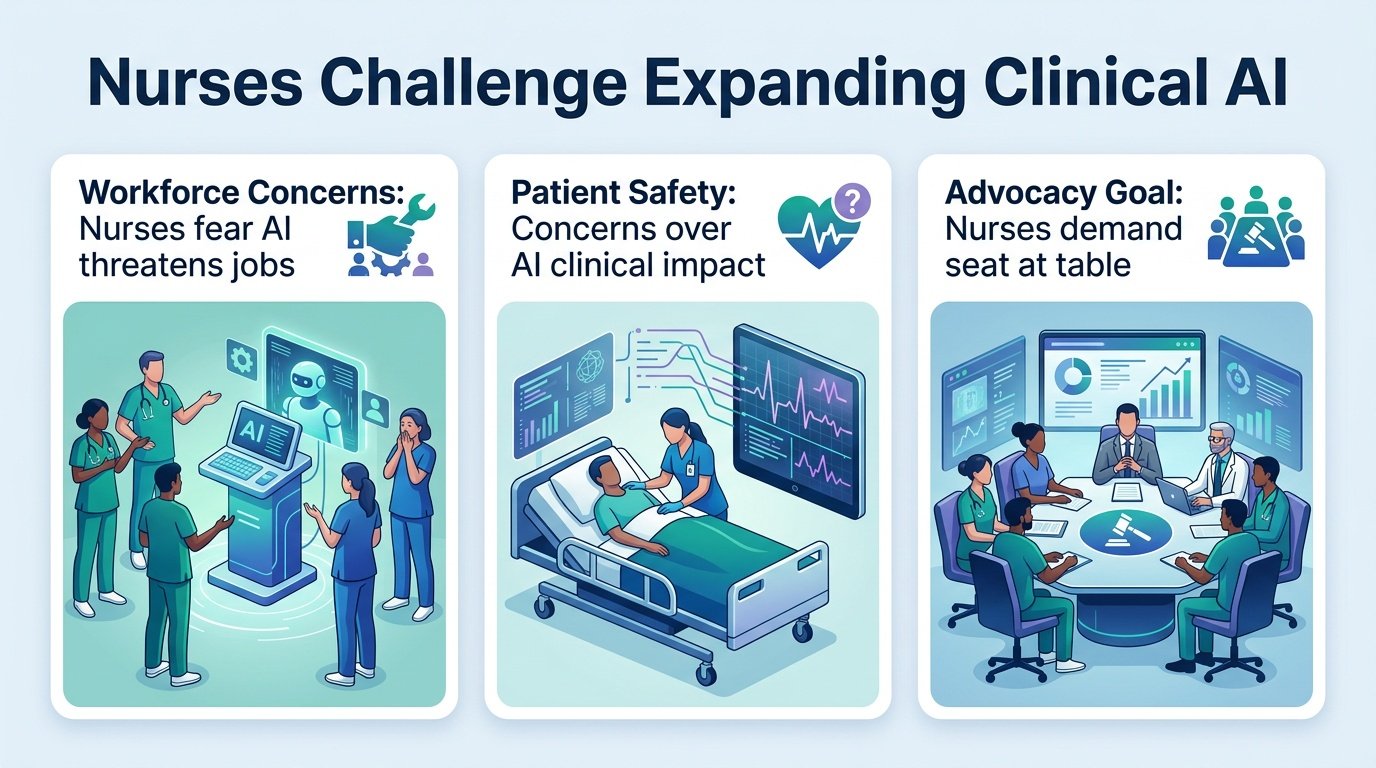
Hospital administrators are treating clinical artificial intelligence as a cost-saving cure, but the frontline workforce sees a direct threat to patient safety.
Hospitals are rushing to deploy clinical algorithms to manage patient monitoring and staffing levels. But the people actually delivering the care are pushing back. Major labor groups are staging protests and securing contract clauses to regulate how these tools are used.
This is not just standard labor anxiety about automation. It is a fundamental battle over how healthcare is valued and who controls clinical decisions.
The Cost Center Trap
Under current hospital billing structures, bedside nursing is classified merely as a hospital cost. Meanwhile, health systems are actively pursuing billing codes for autonomous AI, which would turn software into a direct revenue stream.
This financial asymmetry creates a dangerous incentive. If an algorithm generates revenue but a nurse is just an expense, administrators will inevitably favor the machine.
Judgment Under Surveillance
Nurses warn that untested algorithms are already being used to justify workforce reductions and monitor staff performance. When software dictates care plans, it overrides the clinical intuition of the person at the bedside.
Health systems argue that collaborative, nurse-designed tools can alleviate burnout. But when technology is forced from the top down, it does the opposite. It turns skilled clinicians into data-entry clerks who must constantly fight a machine to protect their patients.
The growing resistance signals a shift. Tech developers can no longer sell software solely to hospital executives. If they do not build tools with the frontline workforce, they will face a wall of labor resistance.