A massive investment in full-body scanning reveals a fundamental shift toward startups that build their own clinical data from scratch.
Can consumer curiosity sustain a multi-billion-dollar healthcare business?
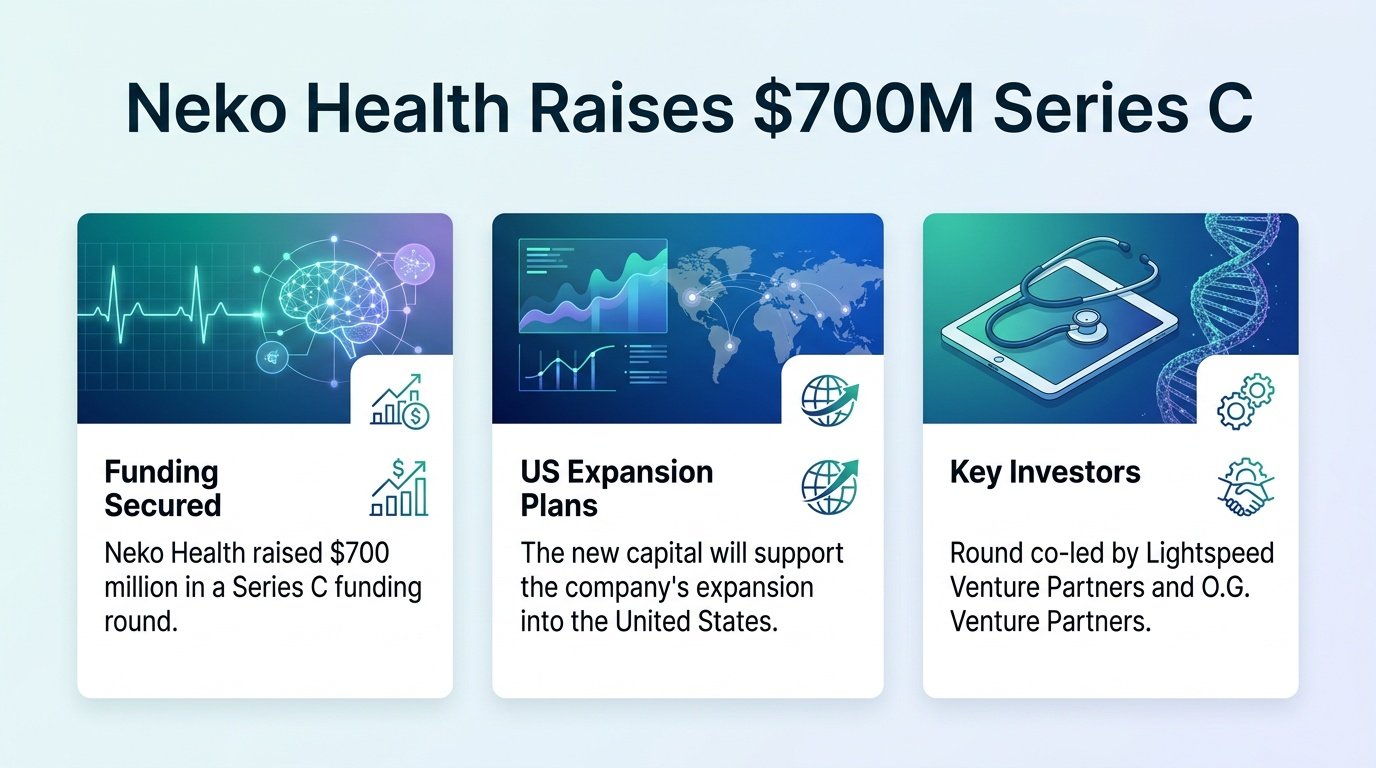
Neko Health just secured a $700 million Series C funding round at a $7 billion valuation to bring its preventive imaging to the United States. The company bypasses traditional medical records entirely. Instead, it uses proprietary sensors and AI to collect fresh physiological data during a 60-minute session.
The Data Ownership Play
Most medical AI companies train their models on messy, fragmented hospital records. Neko is building its own clean dataset. By controlling the hardware and the clinic experience, the startup bypasses the legacy healthcare system.
This “full-stack” approach explains the massive valuation. Investors are betting on the proprietary data pipeline, not just the software.
But scaling this model in the US presents steep challenges. A £299 scan appeals to worried well consumers in London and Stockholm. Translating that demand to the complex US insurance and regulatory landscape is a different beast.
The Preventive Paradox
With a 300,000-person US waitlist, consumer interest is undeniable. Yet, clinical skepticism remains high.
Mass screening of asymptomatic people often leads to overdiagnosis and unnecessary follow-up tests. Neko must prove its AI reduces healthcare costs rather than bloating them with false alarms.
If Neko succeeds, it proves that the future of health tech belongs to those who own the data generation. If it fails, it will be a very expensive lesson in the limits of wellness consumerism.