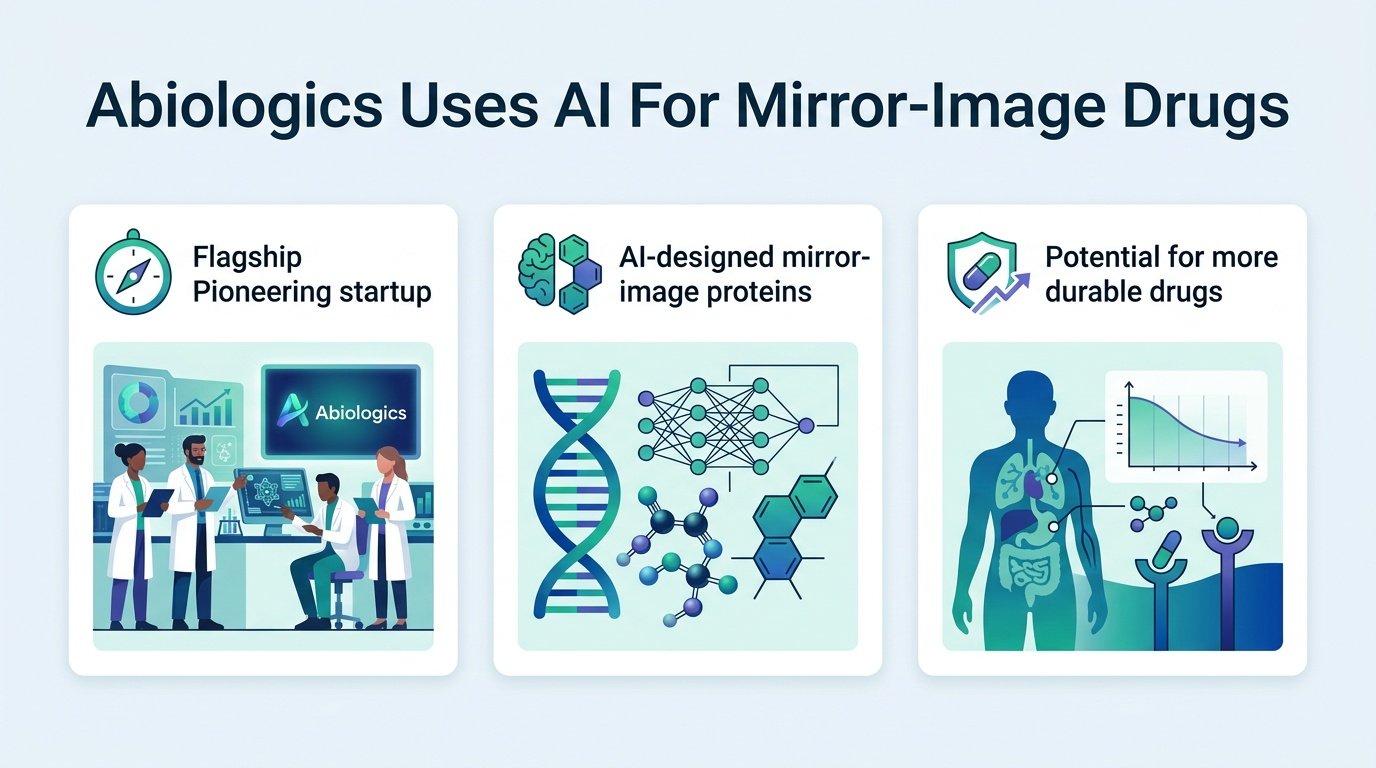
By rebuilding proteins backward, drug developers are trying to bypass the human digestive system’s natural defenses.
The biggest limitation of biological drugs is not their efficacy. It is their fragility. Because natural proteins degrade rapidly inside the human body, patients must endure frequent, painful injections.
Now, a new approach aims to solve this by flipping biology on its head.
The mirror-image trick
By using artificial intelligence to design proteins made of mirror-image D-amino acids, researchers are building molecules that human enzymes do not recognize. The startup Abiologics calls these synthetic creations “Synteins.”
Because the body’s digestive enzymes cannot break them down, these drugs could theoretically be taken as oral pills rather than shots. This could open up new treatment pathways for oncology, immunology, and central nervous system disorders.
This is a massive shift in drug design. Instead of relying on living cells to brew medicines, this method combines generative AI with high-throughput chemical synthesis.
The scaling bottleneck
But biology is stubborn.
While mirror-image proteins evade destruction, chemically synthesizing large proteins at scale is incredibly difficult. Traditional biologics rely on cheap, self-replicating yeast or bacteria. Synthetic chemistry, even aided by AI, must prove it can match that scale without astronomical manufacturing costs.
Furthermore, bypassing the immune system’s recognition could have unintended consequences. If a synthetic protein persists too long in the body, managing side effects becomes much harder.
The promise of oral biologics is massive. However, the transition from AI-designed models to viable, scalable human therapies remains a steep mountain to climb.