
A battle over who actually delivers virtual care is forcing a reckoning for the entire digital health industry.
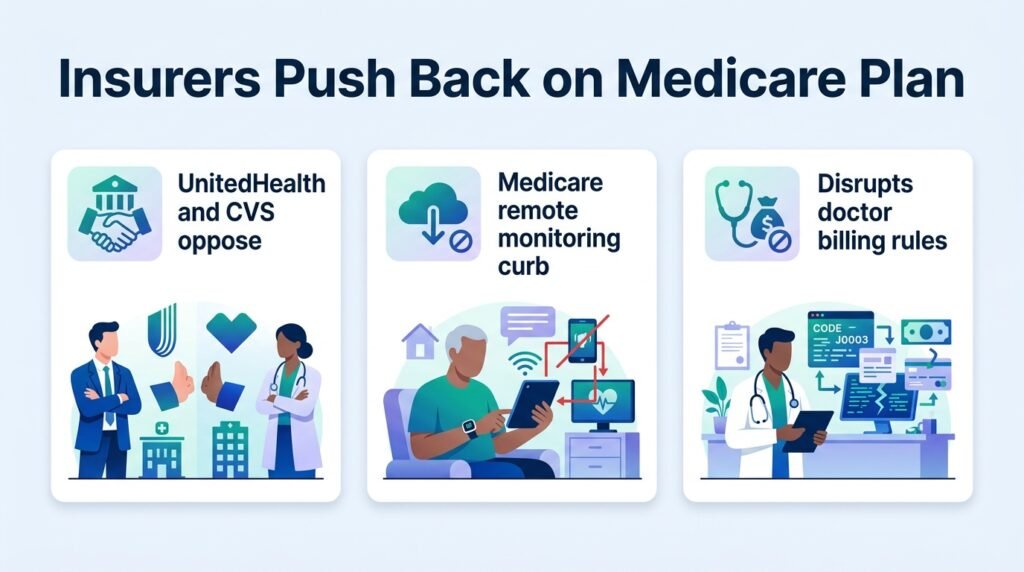
The federal government wants to clean up remote patient monitoring. By proposing to restrict Medicare reimbursements to clinical staff directly employed by billing practices, regulators are targeting the third-party vendors that power these programs. But major insurers like UnitedHealth and CVS are fighting back.
This is not just a billing dispute. It is a fundamental clash over how digital health scales.
For years, the remote monitoring boom relied on a convenient fiction: that doctors were actively watching the data. In reality, third-party software vendors did the heavy lifting, flagging anomalies for clinical review. Regulators are now calling time on this model.
The Billing Loophole
The Centers for Medicare & Medicaid Services (CMS) has a valid concern. A federal report revealed that 43% of remote monitoring beneficiaries did not receive complete care. For years, clinics outsourced the actual monitoring to third-party tech companies. The clinic billed Medicare, paid the vendor a cut, and pocketed the rest.
CMS wants to end this middleman economy. If the rule passes, only direct clinic employees can perform the monitoring.
The Rural Fallout
While the policy aims to curb low-value billing, the sudden shift could trigger a care cliff. A coalition of healthcare organizations warns the rule will disrupt care for more than 1 million patients.
Small and rural practices rarely have the capital to hire full-time monitoring staff. Forcing them to build in-house operations will likely cause them to scrap remote monitoring entirely.
This clash exposes a fundamental tension in digital health. Regulators want clinical accountability, but the infrastructure of modern medicine relies heavily on outsourced scale. Striking the middleman might protect the taxpayer wallet, but it risks leaving vulnerable patients disconnected.