The federal government is finally dismantling the outdated reimbursement models that treated digital algorithms like physical MRI machines.
For years, digital health developers faced a frustrating paradox. They built sophisticated software designed to improve patient outcomes, but Medicare reimbursed them using legacy frameworks built for physical hardware.
That is about to change. Under a new proposal, federal regulators are rebranding these technologies as “Software as a Medical Service” (SaMS).
The New Playbook
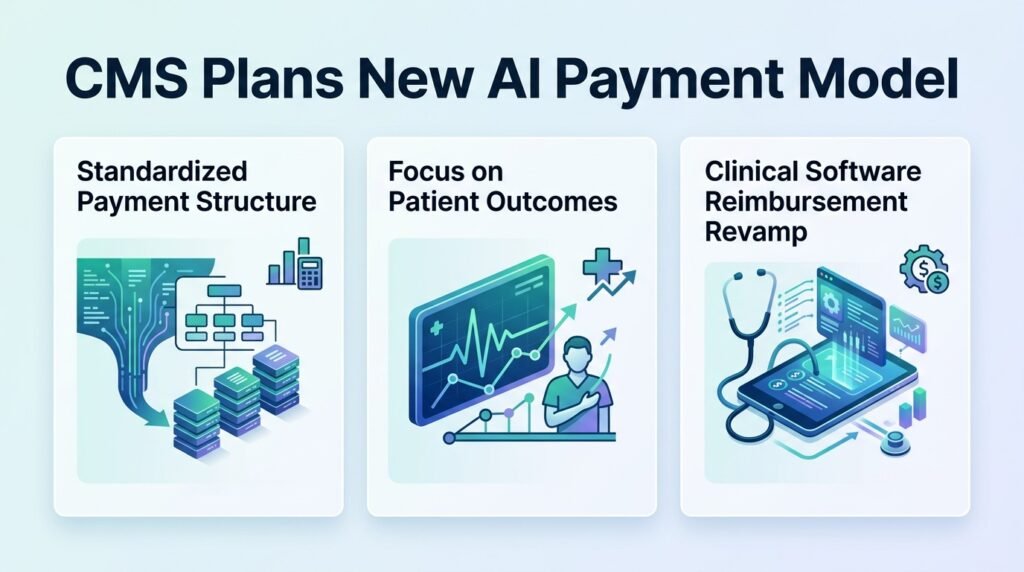
The proposal introduces a temporary “O1” status indicator for 36 algorithm-driven diagnostic codes. This is not just a cosmetic update. It is a deliberate transition away from paying for the mere use of a tool toward paying for its actual impact.
This shift coincides with the launch of the ACCESS model, which will reimburse AI-enabled chronic care based on patient outcomes. The message is clear. The government wants to stop paying for the novelty of technology and start paying for its clinical utility.
The Survival Test
This shift signals a harsh reality for digital health vendors. The era of selling AI on the promise of administrative efficiency or raw speed is ending.
To survive in this new regulatory landscape, developers must prove clinical utility. They must show that their software actually keeps patients healthier or reduces hospital readmissions.
But significant uncertainty remains. Regulators have not yet finalized which specific tools will qualify for this pathway. The industry now faces a tense waiting game to see where the line between clinical software and administrative overhead will be drawn.