A mismatch between the genetic makeup of blood donors and recipients is driving a silent crisis in sickle cell care.
For patients with sickle cell disorder, life-saving blood transfusions carry a hidden risk. Approximately 17 percent of UK sickle cell patients develop dangerous antibodies because the donor pool does not match their genetic profile. Most UK blood donors are of European ancestry, while most sickle cell patients are of African ancestry.
Traditional blood matching only looks at major blood groups. It misses minor variations, leading to immune reactions over time.
The genomic shift
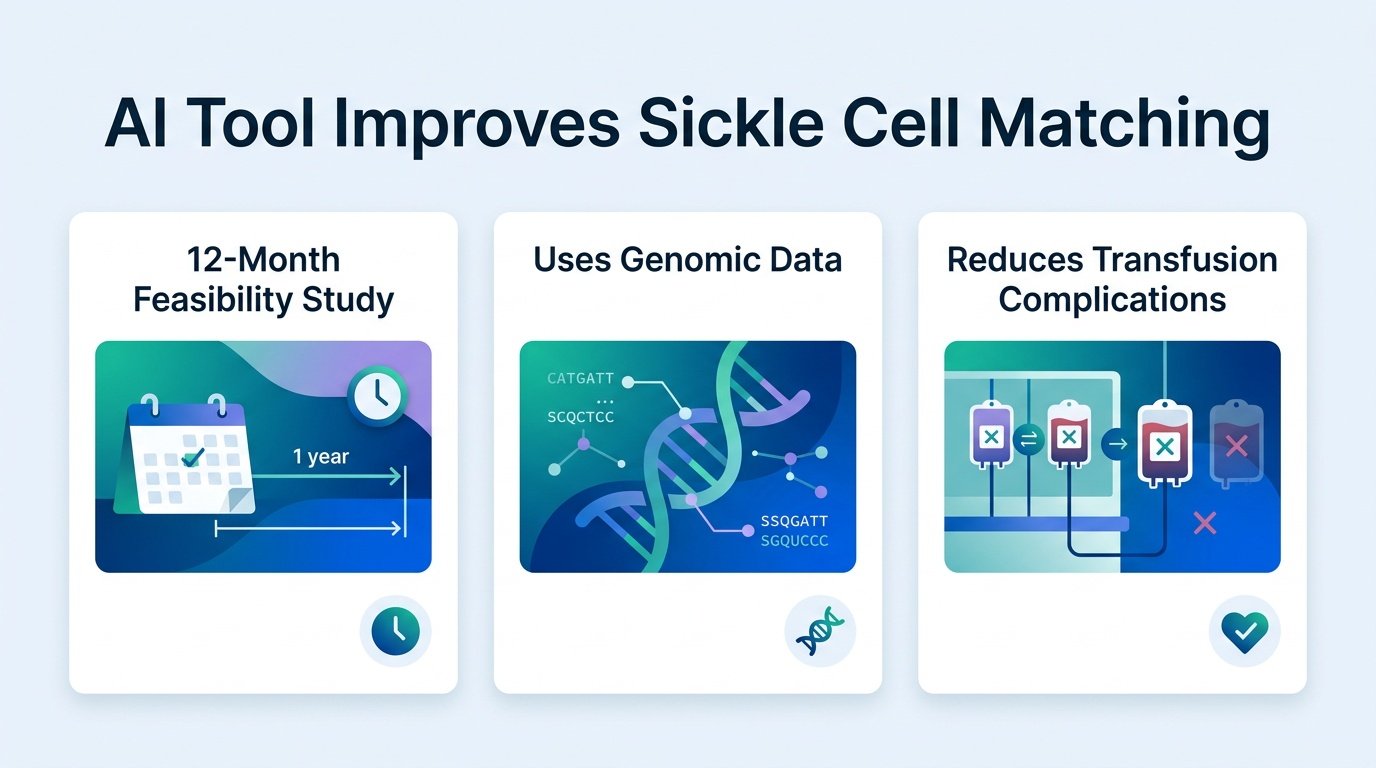
A new 12-month feasibility study is testing an AI tool called bloodMatcher. It analyzes genomic data to automate precise matching. The trial involves 40 adult patients at University College London Hospitals.
By using DNA-based genotyping, the system aims to find near-perfect matches that manual testing misses. This moves matching from a manual, reactive process to an automated, preventative one. But this is not just about better software. It is a logistical necessity.
The scaling bottleneck
If the trial succeeds, the real challenge begins. Scaling genomic matching requires a massive shift in how blood services collect and catalog donor DNA.
AI can only match what is in the database. Without a diverse donor pool, even the smartest algorithm cannot find a match that does not exist.
This trial is a test of whether AI can solve a biological bottleneck, or if the technology is running ahead of the actual supply chain. The algorithm is ready, but the infrastructure must catch up. If successful, this could pave the way for fully automated blood supply chains. But the immediate hurdle remains human, not digital.