
⚡ Quick Summary
This review discusses how knowledge-based biased docking enhances molecular docking performance by leveraging protein-solvent interactions. The authors present a comprehensive overview of its applications in various docking scenarios, highlighting its potential to inform future Machine Learning and AI methodologies.
🔍 Key Details
- 📊 Focus: Protein-ligand interactions and molecular docking
- 🧪 Key Strategy: Knowledge-based biased docking
- ⚙️ Applications: Pose prediction, virtual screening, protein-protein docking, metalloprotein docking
- 📅 Timeline: Research conducted over the past decade since 2012
🔑 Key Takeaways
- 🔬 Biased docking improves pose prediction and scoring in molecular docking.
- 🌊 Protein-solvent interactions can be simulated to mimic experimental conditions.
- 💡 The strategy has broad applicability across various docking scenarios.
- 🤖 Insights from this research can guide the development of AI-based methodologies.
- 📈 Enhanced docking performance can lead to more accurate predictions in drug discovery.
- 📚 Contextualization within broader literature provides a solid foundation for future research.
- 🛠️ Implementation of biased docking can be achieved using current docking software.
📚 Background
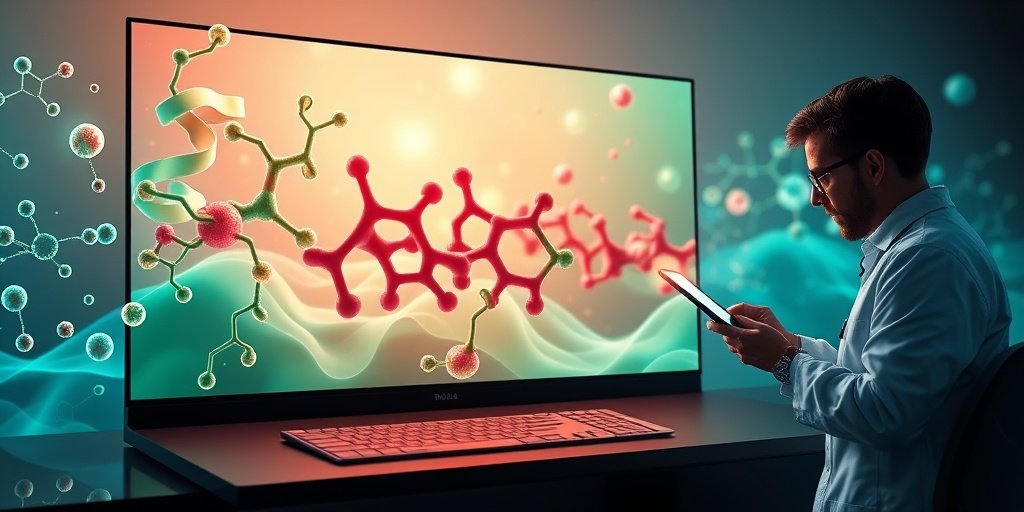
Understanding protein-ligand interactions is crucial for drug discovery and development. Traditional molecular docking methods often struggle with accuracy due to the complexity of these interactions. The introduction of knowledge-based biased docking represents a significant advancement, as it utilizes insights from protein-solvent interactions to enhance docking predictions.
🗒️ Study
The authors of this review summarize their decade-long research journey, which began with their foundational work in 2012. They have consistently demonstrated that simulating protein-solvent interactions in mixed solvents can significantly improve the accuracy of docking predictions. This review serves as a guide for implementing the biased docking strategy using contemporary docking software.
📈 Results
The findings indicate that knowledge-based biased docking not only improves pose prediction but also enhances the scoring of docking results. The authors provide evidence of its effectiveness across various applications, including virtual screening and protein-protein docking, showcasing its versatility and reliability in molecular simulations.
🌍 Impact and Implications
The implications of this research are profound, as improved docking performance can accelerate the drug discovery process. By integrating insights from protein-solvent interactions, researchers can achieve more accurate predictions, ultimately leading to the development of more effective therapeutics. Furthermore, the potential integration of this strategy with Machine Learning and AI technologies could revolutionize the field of molecular docking.
🔮 Conclusion
This review highlights the transformative potential of knowledge-based biased docking in enhancing molecular docking performance. By leveraging insights from protein-solvent interactions, researchers can achieve greater accuracy in their predictions, paving the way for advancements in drug discovery. The future of molecular docking looks promising, especially with the anticipated integration of AI methodologies.
💬 Your comments
What are your thoughts on the advancements in molecular docking through knowledge-based biased docking? We would love to hear your insights! 💬 Share your comments below or connect with us on social media:
How and Why Does Knowledge-Based Biased Docking Improve Molecular Docking Performance?
Abstract
Since 2012, with the publication of our foundational work “Solvent structure improves docking prediction in lectin-carbohydrate complexes,” our group has been devoted to the study of protein-ligand interactions using molecular simulation tools. Over the past decade, we have shown that protein-solvent interactions, particularly when simulated in mixed solvents containing probes such as ethanol, phenol, and isopropanol, often mimic the interactions observed in experimental protein-ligand complexes. This knowledge can be used to improve docking performance by guiding pose prediction and scoring. We termed this strategy-biased docking. Over the years, we demonstrated its applicability to pose prediction, virtual screening (VS), protein-protein docking, and metalloprotein docking. In this short review, we summarize our results and contextualize them within the broader literature, offering a concise description of how to implement the biased docking strategy using current docking software. We also explore the physicochemical rationale behind its effectiveness and discuss how this knowledge can inform emerging Machine Learning and AI-based methodologies.
Author: [‘Prieto JM’, ‘Lannot JO’, ‘Clemente CM’, ‘Modenutti C’, ‘Turjanski A’, ‘Martí MA’]
Journal: ChemMedChem
Citation: Prieto JM, et al. How and Why Does Knowledge-Based Biased Docking Improve Molecular Docking Performance?. How and Why Does Knowledge-Based Biased Docking Improve Molecular Docking Performance?. 2026; 21:e202501058. doi: 10.1002/cmdc.202501058