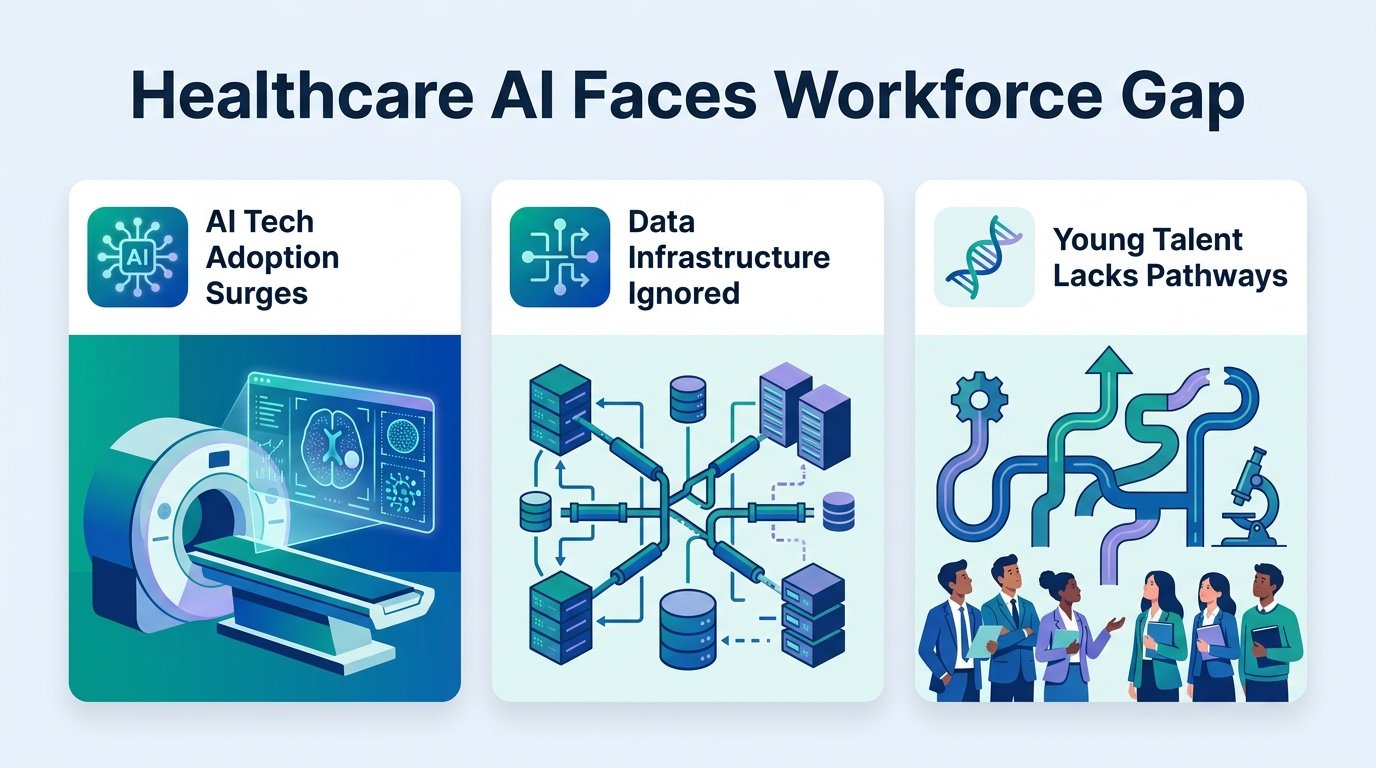
Hospitals are spending millions on advanced algorithms while leaving the frontline staff who must use them completely in the dark.
Health systems are rushing to deploy clinical AI tools. But buying the software is the easy part. The real bottleneck is human.
Between 30% and 70% of European healthcare workers currently lack the basic digital skills needed to navigate modern health IT. When massive rollouts like the NHS deployment of Microsoft 365 Copilot occur, they often hit a wall of staff anxiety and unpreparedness.
The Invisible Pipeline
The crisis starts before workers even enter the clinic. Young professionals entering the workforce have almost no visibility into digital health infrastructure or data architecture as viable career paths. We are training doctors and nurses for a physical-first world, then dropping them into a digital-first reality.
Hiring managers are starting to prioritize candidates who can seamlessly integrate technology into daily clinical workflows. Yet, the educational pipeline remains stuck in the past. AI fluency is no longer a niche resume builder. It is a core requirement.
The Cost of Neglect
If health systems do not close this gap, their expensive software investments will fail. The European Union is attempting to address this by funding multi-million-euro initiatives to co-design specialized AI training. But public funding moves slowly.
Until health systems treat workforce training as a capital expense on par with software licensing, clinical AI will remain a source of friction rather than relief.