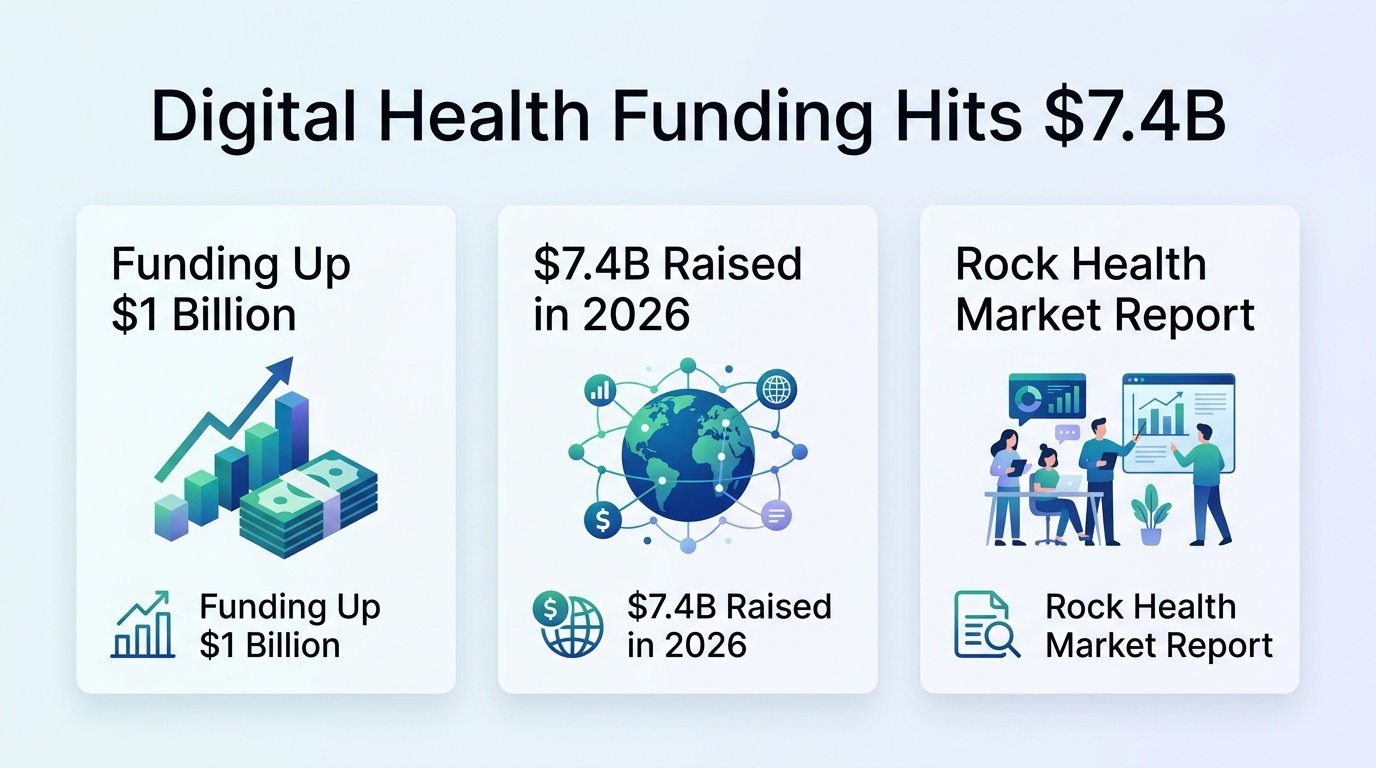
The digital health funding rebound is real, but it is creating a stark divide between a few giants and the rest of the market.
The headline numbers suggest a triumphant return to form. Digital health startups raised $7.4 billion in the first half of 2026, marking a one-billion-dollar increase over the same period last year. But this is not a rising tide lifting all boats.
Look closer at the mechanics of this recovery, and a highly concentrated market emerges.
The Consolidation Trap
Overall deal volume remained flat. Instead of spreading capital across a diverse ecosystem, investors concentrated their bets on massive megadeals of $100 million or more. These giant rounds accounted for a staggering 45% of all funding during this period.
Two companies alone swallowed $825 million of the total pool. This concentration creates a fragile market. When nearly half of all capital is locked up in a handful of late-stage companies, early-stage founders face a brutal environment where funding remains scarce.
Chasing Consumers and GLP-1s
Where the money does flow, it follows highly specific trends. Mental health remains the top clinical sector for the seventh consecutive year. However, weight management is scaling rapidly, fueled entirely by the massive GLP-1 ecosystem.
Crucially, we are seeing a distinct shift toward direct-to-consumer models. This pivot suggests that selling to hospitals and employers remains slow and difficult. Startups are bypassing institutional buyers entirely to go straight to the patient’s wallet.
For those unable to secure consumer traction or megadeal funding, the exit ramp is the only option. A surging merger and acquisition market saw 115 acquisitions finalized in six months, signaling that consolidation is now the primary survival strategy in digital health.