A new regulatory shortcut could quietly solve the worst bottleneck in cancer treatment.
Manual contouring is the bane of radiation oncology. Clinicians spend hours tracing organs on scans to target tumors while sparing healthy tissue. It is a slow, tedious process for the two million American patients undergoing radiation therapy each year.
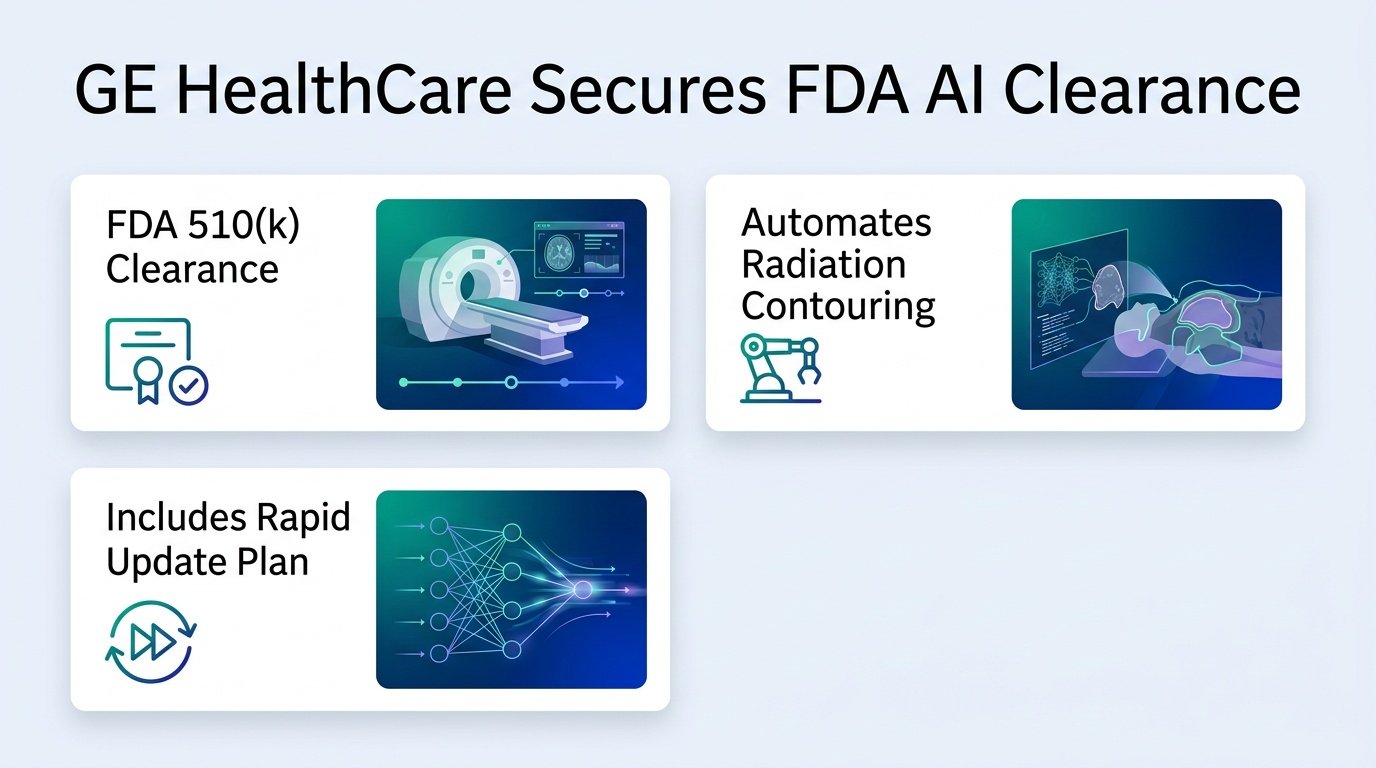
The FDA just cleared GE HealthCare’s MIM Contour ProtégéAI+ 2.0. The software automates this tracing process with new brain and pelvis models.
But the real story is not the automation. It is how the software will evolve.
The regulatory shortcut
This clearance includes a Predetermined Change Control Plan. This regulatory mechanism lets the manufacturer update its AI models without submitting a new application each time.
This bypasses the traditional, sluggish regulatory pipeline.
For clinics, this means algorithms that adapt to new clinical data in weeks rather than years. It turns static medical software into a living tool.
It signals a shift in how regulators view clinical AI. Instead of evaluating a frozen product, they are approving a process for continuous learning.
The safety trade-off
Continuous updates sound ideal, but they introduce risk.
If an algorithm updates silently, clinicians must remain hyper-vigilant. A subtle shift in how a model defines a tumor boundary could have massive consequences for patient safety.
Automation saves time, but human oversight remains the ultimate bottleneck. Clinics must now prepare to audit software that changes under their feet. The efficiency gains are real, but the clinical responsibility still rests entirely on the human oncologist.