Automating the routine mechanics of ultrasound exams is no longer a luxury; it is becoming a survival strategy for short-staffed clinics.
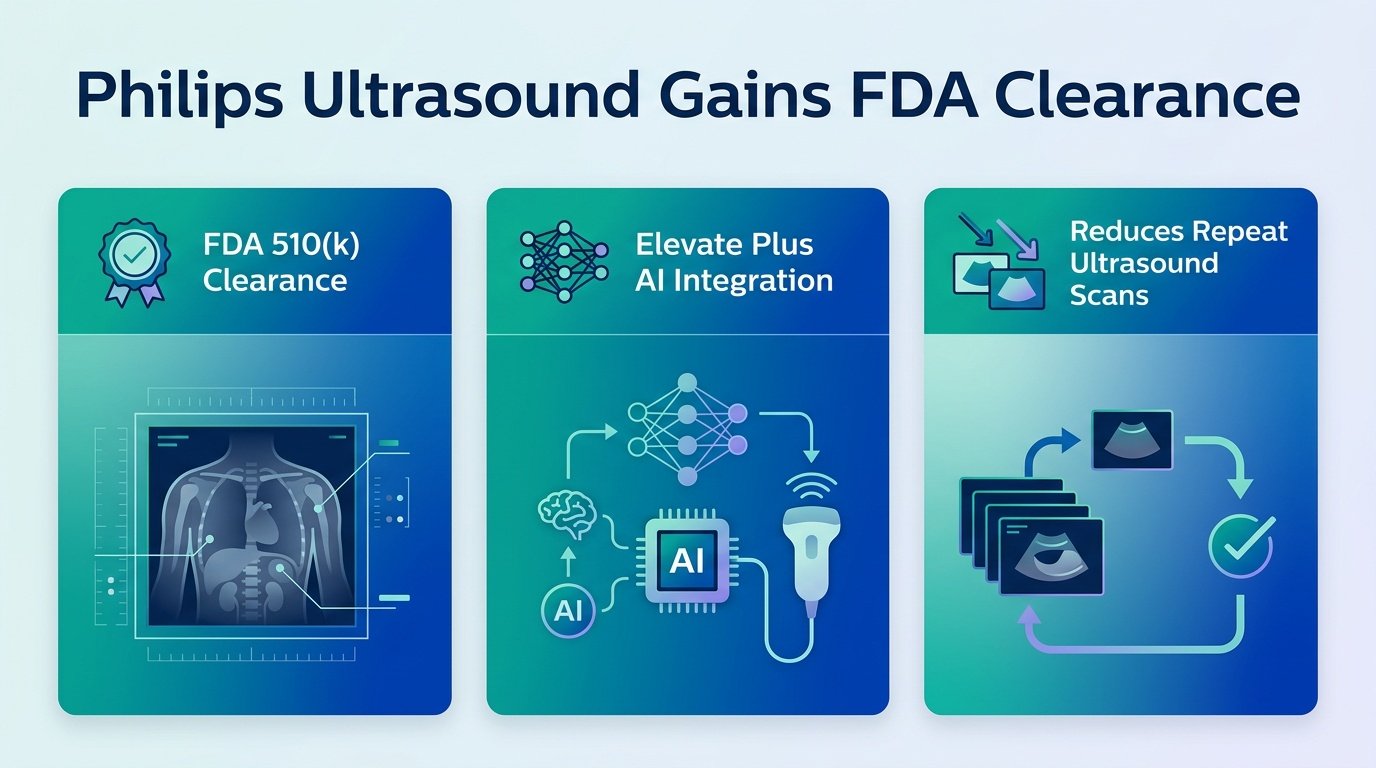
The FDA clearance and CE Mark for the Elevate Plus software upgrade signals a shift in how medical imaging tackles clinical burnout. Instead of chasing flashy autonomous diagnostics, the industry is focusing on the tedious, repetitive tasks that drain sonographer time.
Ultrasound is notoriously operator-dependent. A single scan requires dozens of manual measurements and precise probe positioning. When clinics are understaffed, this manual workload leads to physical fatigue, inconsistent data, and costly repeat scans.
Standardizing the Scan
The new software attempts to automate these physical bottlenecks. Its abdominal tool automates routine measurements with a reported 93% accuracy rate. It also integrates Koios AI decision support directly into the cart to assist in classifying breast and thyroid lesions.
By embedding decision support directly into the hardware, the system aims to standardize image quality regardless of the operator’s experience level. This is not about replacing the human clinician. It is about reducing the cognitive load of routine charting.
The Adoption Hurdle
However, software upgrades only work if clinics actually deploy them. Integrating decision support directly into existing workflows is a step forward, but legacy hospital IT systems often resist seamless updates.
Furthermore, while 93% accuracy is high, clinicians must still verify every automated measurement. If verification takes as long as manual measurement, the actual time savings in a chaotic, real-world clinic may shrink. The real test is whether this automation truly reduces physical strain and repeat scans, or simply shifts the administrative burden.