A delayed regulatory nod puts Boston Scientific’s multi-billion-dollar bet to the test.
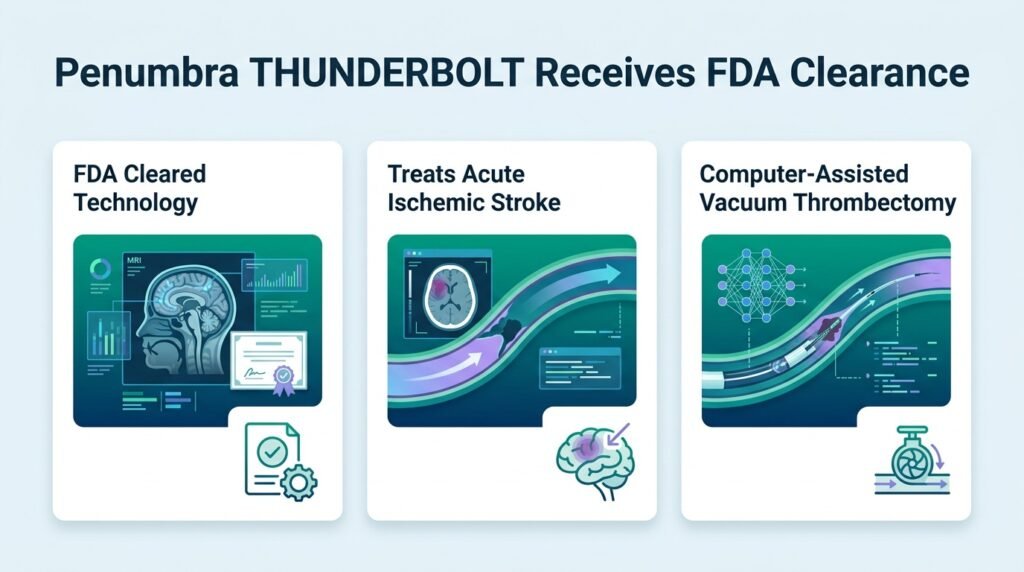
Clearing a blood clot from a stroke patient’s brain is a high-stakes race against cellular death. For years, physicians have relied on manual suction to pull these blockages out. The FDA clearance of the Thunderbolt catheter system marks a shift toward automation in neurovascular care.
Algorithmic Clot Removal
Thunderbolt is the first computer-assisted vacuum thrombectomy device cleared for acute ischemic stroke. Instead of constant, static suction, the system uses modulated aspiration to dynamically adjust the vacuum force. This helps ingest tough clots while protecting delicate brain blood vessels. The device joins Penumbra’s existing computer-assisted portfolio, expanding the technology from peripheral vessels into the brain.
The technology faced a year-long delay due to clinical trial setbacks and FDA-requested endpoint changes. Its arrival brings needed relief to investors who watched the regulatory hurdles drag on.
The $14.5 Billion Bet
This clearance is a critical milestone for Boston Scientific. The medical device giant agreed to acquire Penumbra for $14.5 billion in January 2026. Analysts expect Thunderbolt to generate roughly $100 million in incremental revenue over time.
With global stroke mortality projected to rise 50% by 2050, the demand for rapid clot-removal tech is soaring. Boston Scientific is betting that algorithmic precision, rather than manual technique, will soon define stroke intervention. The challenge now is proving that computer-assisted suction actually delivers better patient outcomes in real-world cath labs.