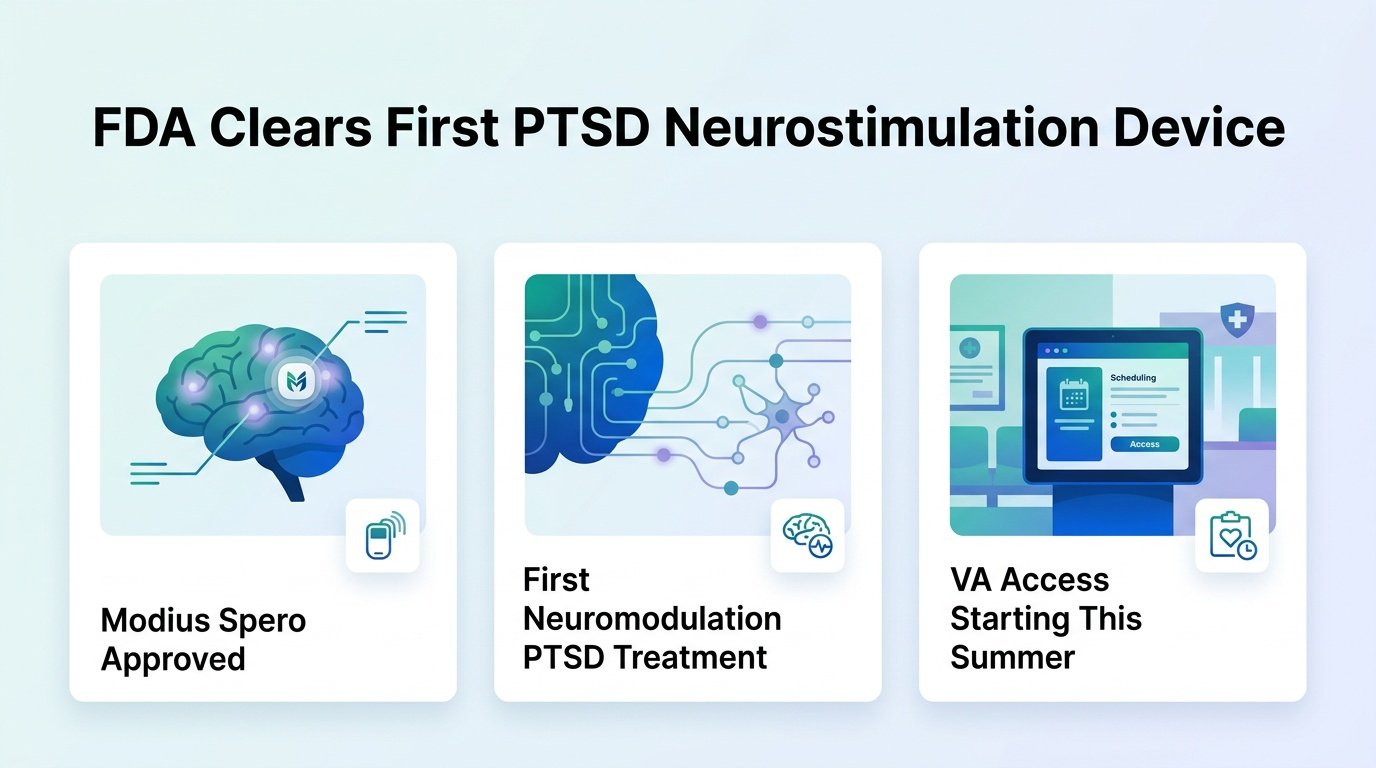
The regulatory approval of a non-invasive brain stimulation headset for PTSD exposes a massive, decades-long stagnation in psychiatric drug development.
For twenty-five years, pharmaceutical innovation for Post-Traumatic Stress Disorder has been virtually non-existent. The last time the FDA approved a new drug for the condition was in 2001. After the regulator recently rejected MDMA-assisted therapy, patients and clinicians were left stranded.
Now, the clearance of a wearable neurostimulation device marks a pivot from chemistry to electricity.
A Shift to Physics
The newly cleared device, Modius Spero, delivers low-level electrical stimulation behind the ears to target the vestibular system. It is a non-invasive, drug-free approach designed for home use.
In a clinical trial of 383 participants, two-thirds of users reported clinically meaningful symptom improvement. This is not just a new product. It is a signal that regulators are looking outside the traditional pharmacy to address a mental health crisis affecting 13 million Americans.
The Access Hurdle
But clearance does not automatically equal adoption. The device will first reach veterans through the Veterans Affairs system this summer.
The real test lies in scaling beyond specialized clinics. Will insurance providers cover a wearable device with the same consistency as a generic pill?
Without broad reimbursement, this technology risks becoming a luxury tool rather than a standard of care. It challenges the industry to prove that digital therapeutics can survive the harsh economics of healthcare distribution.