
Consumer smartwatches generate millions of heart readings every day, but clinicians waste valuable hours sorting through uninterpretable noise.
The Signal Leak
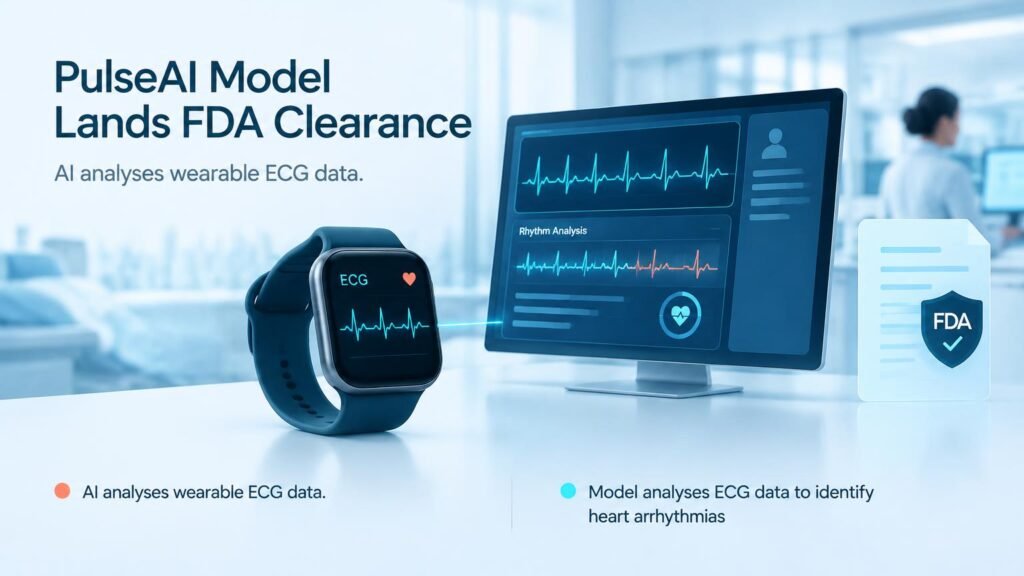
The FDA has cleared PulseAI’s software to analyze electrocardiogram data from compatible consumer wearables. In a prospective study published in Heart Rhythm, the Belfast-based company’s deep-learning model delivered a 92% reduction in inconclusive ECG readings compared to the native Apple Watch algorithm, while also improving atrial fibrillation detection sensitivity.
That distinction is critical.
Clinical Integration
Instead of building hardware, PulseAI plans to integrate its cloud analytics directly into third-party wearables and electronic health record systems. Reducing uninterpretable traces addresses a primary bottleneck in remote patient monitoring: clinician burnout driven by false alarms and unreadable data.
The Real Reality
Clearance is not evidence of improved patient survival. Regulatory 510(k) approval confirms diagnostic equivalence and algorithmic accuracy, not downstream clinical outcomes. The practical test now shifts to real-world integration—whether reducing inconclusive readings actually leads to earlier stroke intervention without triggering unnecessary follow-up testing.