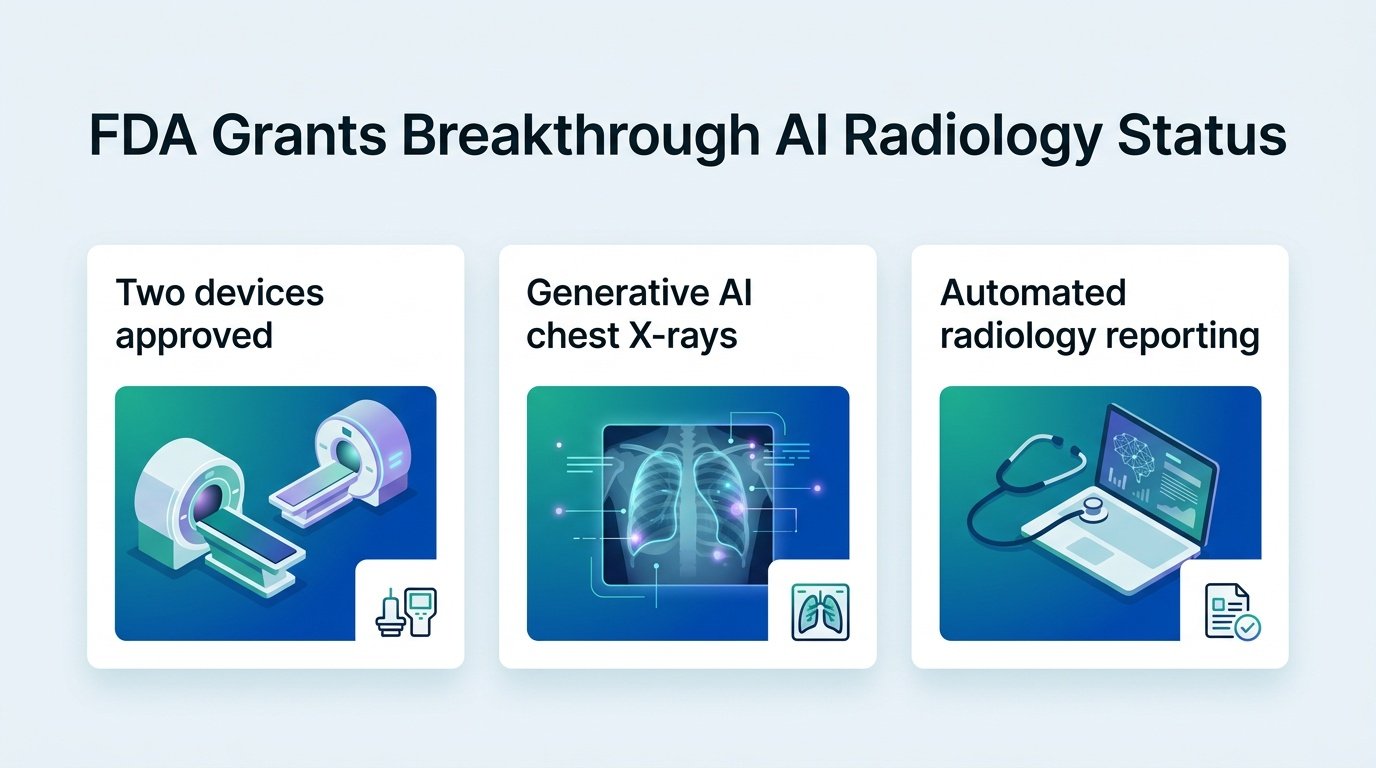
Regulators are clearing the path for AI that writes its own clinical notes, shifting the technology from a simple second pair of eyes to an active administrative partner.
For years, artificial intelligence in radiology did one basic job: it pointed at a spot on an image and flagged an abnormality. The radiologist still had to do the heavy lifting of interpreting the scan and dictating the report.
That workflow is about to crack. The FDA recently granted breakthrough device designations to two systems designed to read chest X-rays and draft the actual radiology reports.
The shift to generation
This is not just faster pattern recognition. It is a transition to vision-language models that synthesize visual data into structured medical text.
Outpatient imaging turnaround times have more than doubled over the last decade. Radiologists are drowning in volume. Automating the draft report targets the primary bottleneck in the system: documentation.
By embedding generative AI directly into existing workflows, these tools aim to shave minutes off every scan.
The human risk
But this shift introduces a fragile point of failure.
When an AI drafts a narrative, it invites automation bias. Busy clinicians might skim and sign off on a generated report, missing subtle errors or inconsistencies.
While early data suggests these tools improve accuracy, they still require strict human oversight. The technology is moving faster than our understanding of how tired doctors interact with machine-generated text. If a physician treats the AI’s draft as a final word, the speed gains will come at the cost of diagnostic safety.