⚡ Quick Summary
This qualitative study explored parental experiences with childhood ear health clinics and their acceptability of AI-based diagnostic tools for otitis media (OM). Findings revealed both concerns and recognition of the potential benefits of AI/ML in improving healthcare delivery for children.
🔍 Key Details
- 👥 Participants: Parents of children treated for OM at an Australian urban teaching hospital.
- 📝 Methodology: Semi-structured interviews analyzed thematically.
- 🌟 Key Themes: Seven themes identified related to care experiences and AI/ML perceptions.
🔑 Key Takeaways
- 👶 Meeting children’s needs is a primary concern for parents in ear health clinics.
- ⏳ Access challenges and long wait times for audiology and ENT care were significant issues.
- 🏙️ Urban vs. rural healthcare experiences highlighted disparities in service delivery.
- 🏥 Public vs. private health systems presented different levels of satisfaction among parents.
- 💡 AI/ML tools were seen as potentially beneficial for diagnosing ear diseases.
- ⚠️ Concerns about the reliability and understanding of AI/ML tools were prevalent among parents.
- 📚 Education on AI/ML in OM diagnosis is needed to enhance parental understanding and acceptance.
📚 Background
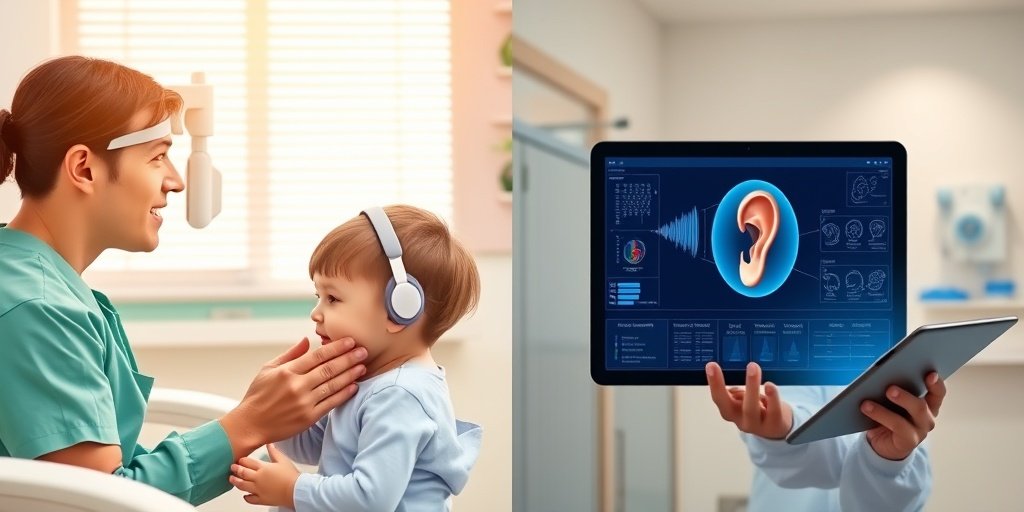
Childhood otitis media (OM) is a common condition that can lead to significant health issues if not diagnosed and treated effectively. The integration of artificial intelligence (AI) and machine learning (ML) into diagnostic processes has the potential to revolutionize how healthcare providers approach OM. However, understanding parental perspectives on these technologies is crucial for successful implementation.
🗒️ Study
Conducted at an Australian urban teaching hospital, this study involved semi-structured interviews with parents of children diagnosed with OM. The aim was to gather insights into their experiences with current healthcare services and their views on the use of AI/ML tools in diagnosing ear health issues.
📈 Results
The analysis revealed seven key themes that encapsulated parental experiences and perceptions. Parents expressed a strong desire for services that meet their children’s needs while also highlighting the challenges they face in accessing timely care. Notably, while there were concerns regarding AI/ML tools, many parents acknowledged their potential to enhance diagnostic accuracy and healthcare delivery.
🌍 Impact and Implications
The findings from this study underscore the importance of addressing parental concerns about AI/ML in healthcare. By fostering a better understanding of these technologies and their benefits, healthcare providers can improve acceptance and integration into clinical practice. This could lead to enhanced diagnostic processes for childhood OM, ultimately benefiting children’s health outcomes.
🔮 Conclusion
This study highlights the critical role of parental perspectives in shaping the future of AI/ML applications in healthcare. While there are valid concerns, the potential benefits of these technologies in diagnosing childhood ear diseases are significant. Continued education and dialogue with parents will be essential as we move forward in integrating AI/ML into clinical settings.
💬 Your comments
What are your thoughts on the use of AI in healthcare, especially regarding children’s ear health? We would love to hear your opinions! 💬 Share your insights in the comments below or connect with us on social media:
Exploring Parental Experiences of Childhood Ear Health Clinics and Their Acceptability of AI-Based Diagnostic Tools: A Qualitative Study.
Abstract
OBJECTIVE: Artificial intelligence and machine learning (AI/ML) algorithms will transform the childhood otitis media (OM) diagnostic experience. However, there is limited data on parents’ current experiences within clinical settings, limited research exploring AI/ML acceptability among consumers generally, and none regarding consumer perspectives on its use for childhood OM. This study aimed to explore current parental experiences of, as well as their perspectives on the use of AI/ML in, clinical care for OM in children.
DESIGN: We conducted and thematically analysed semi-structured interviews with parents of children seen for OM within the ENT or audiology departments of an Australian urban teaching hospital.
FINDINGS: Seven themes were identified: (1) Meeting children’s needs; (2) Challenges in accessing and waiting for audiology and ENT care; (3) Urban versus rural healthcare experience; (4) Public versus private health system; (5) Strategies for enhancing paediatric audiology services; (6) Perceived benefits of AI/ML in ear disease diagnosis; and (7) Concerns and considerations regarding AI/ML in ear health diagnosis.
CONCLUSIONS: Parents have concerns about the use and development of AI/ML tools, but also acknowledge the potential benefits of such tools for healthcare delivery. Currently, the understanding amongst parents of AIAI/ML/ML tools for OM diagnosis was limited, and more education on the use and development of AIAI/ML/ML for OM is warranted.
PATIENT OR PUBLIC CONTRIBUTION: We did not involve patients or the public in the design of this study. However, three authors have lived experience as parents of children who have had recurrent ear infections.
Author: [‘Stephens JH’, ‘Northcott C’, ‘Machell A’, ‘Lewis T’, ‘Ooi EH’]
Journal: Health Expect
Citation: Stephens JH, et al. Exploring Parental Experiences of Childhood Ear Health Clinics and Their Acceptability of AI-Based Diagnostic Tools: A Qualitative Study. Exploring Parental Experiences of Childhood Ear Health Clinics and Their Acceptability of AI-Based Diagnostic Tools: A Qualitative Study. 2025; 28:e70421. doi: 10.1111/hex.70421