
Using virtual clones to simulate disease progression could finally solve the recruitment bottleneck that stalls rare disease drug development.
How do you prove a drug works when there are barely enough patients to run a trial? For progressive conditions like facioscapulohumeral muscular dystrophy, traditional placebo groups are a luxury researchers cannot afford. Recruiting sick patients to receive a dummy treatment is both ethically difficult and logistically slow.
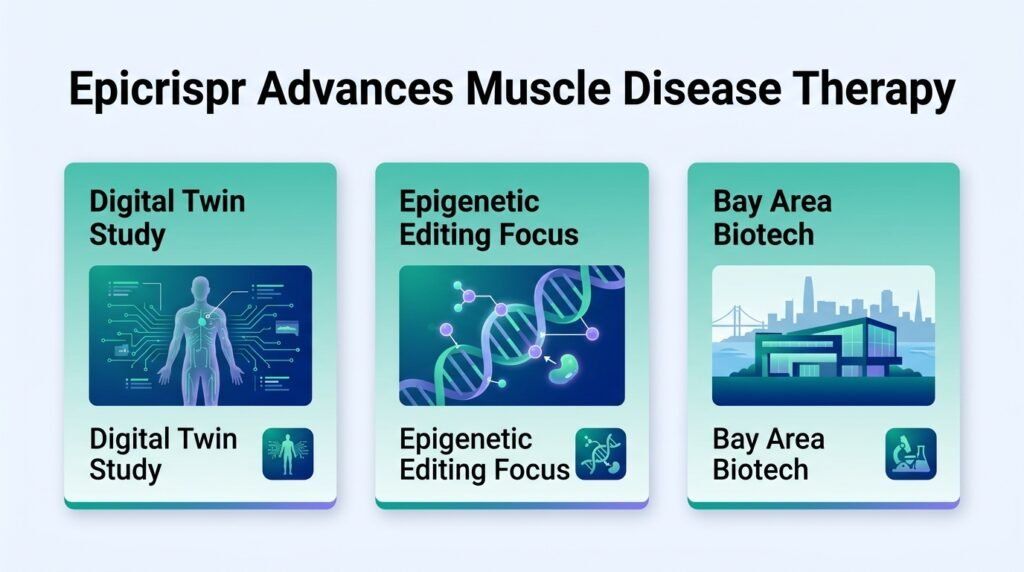
Epicrispr Biotechnologies bypassed this hurdle in its Phase 1/2 trial of EPI-321. Instead of recruiting a physical control group, they built AI-driven digital twins using whole-body MRI scans.
The Virtual Control Shift
Developed with Springbok Analytics, these virtual models simulated how each patient’s muscles would naturally decline without intervention. The trial successfully showed an increase in lean muscle volume. This is a clinical first for this disease.
But the real story is the methodology. By replacing physical placebos with AI-generated comparators, trials can run faster with fewer patients. This approach turns static imaging into a dynamic, predictive tool. It allows researchers to measure efficacy on an individual level rather than relying on broad, noisy population averages.
The Limits of Simulation
Uncertainty remains. Regulators are historically cautious about synthetic data. A digital twin is only as good as the historical data training it. If the simulation miscalculates natural decline, the drug’s perceived efficacy could be skewed.
Yet, for rare diseases with no approved treatments, the trade-off is clear. Virtual controls are moving from experimental math to viable regulatory strategies.