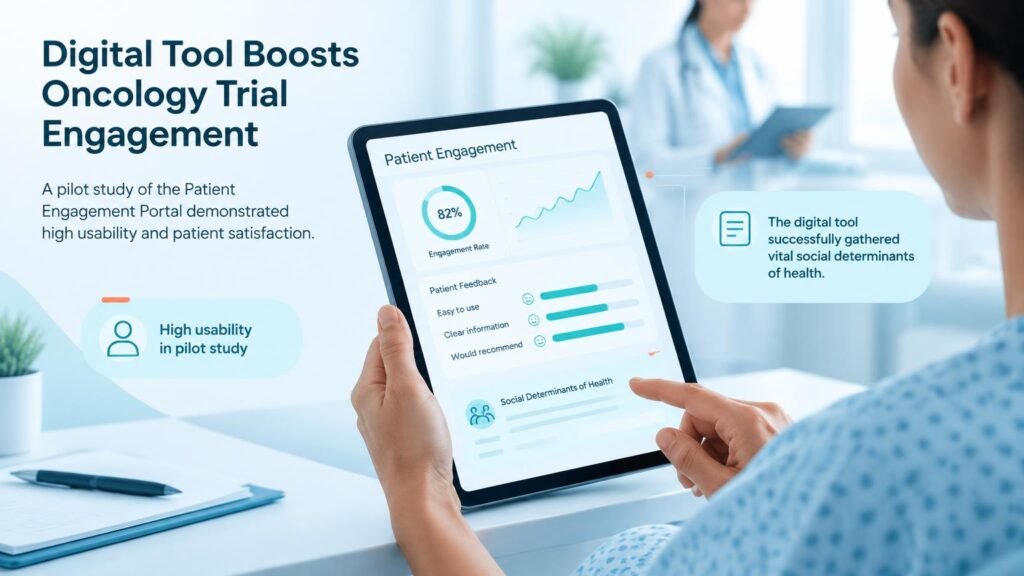
A 40% opt-in rate for a new digital portal shows that trial participants will share sensitive social data when given accessible tools.
Closing the Data Gap
Oncology clinical trials historically struggle to capture social determinants of health, leaving researchers blind to barriers like food insecurity and transportation access. In a pilot across 154 sites within a multi-cancer early detection biobank study, a web-based portal achieved a 40% opt-in rate among participants.
Crucially, 93% of participating patients agreed to future research contact. This suggests that digital touchpoints can secure long-term participant retention rather than overwhelming patients with administrative fatigue.
Beyond Diagnostic Accuracy
Collecting data on housing and transportation is not just an exercise in demographic tracking. It gives clinical trial teams actionable intelligence to address logistics before a participant drops out.
A pilot study is not proof that software solves trial retention. Usability metrics do not automatically convert to completed trials or cheaper drug development. However, replacing manual intake with structured patient portals creates a repeatable baseline for trial equity that manual workflows failed to deliver.
Operational Reality
Site coordination remains the real test. Digital tools only reduce clinical workload if the captured social data triggers automated support interventions, rather than piling more review tasks onto research nurses.