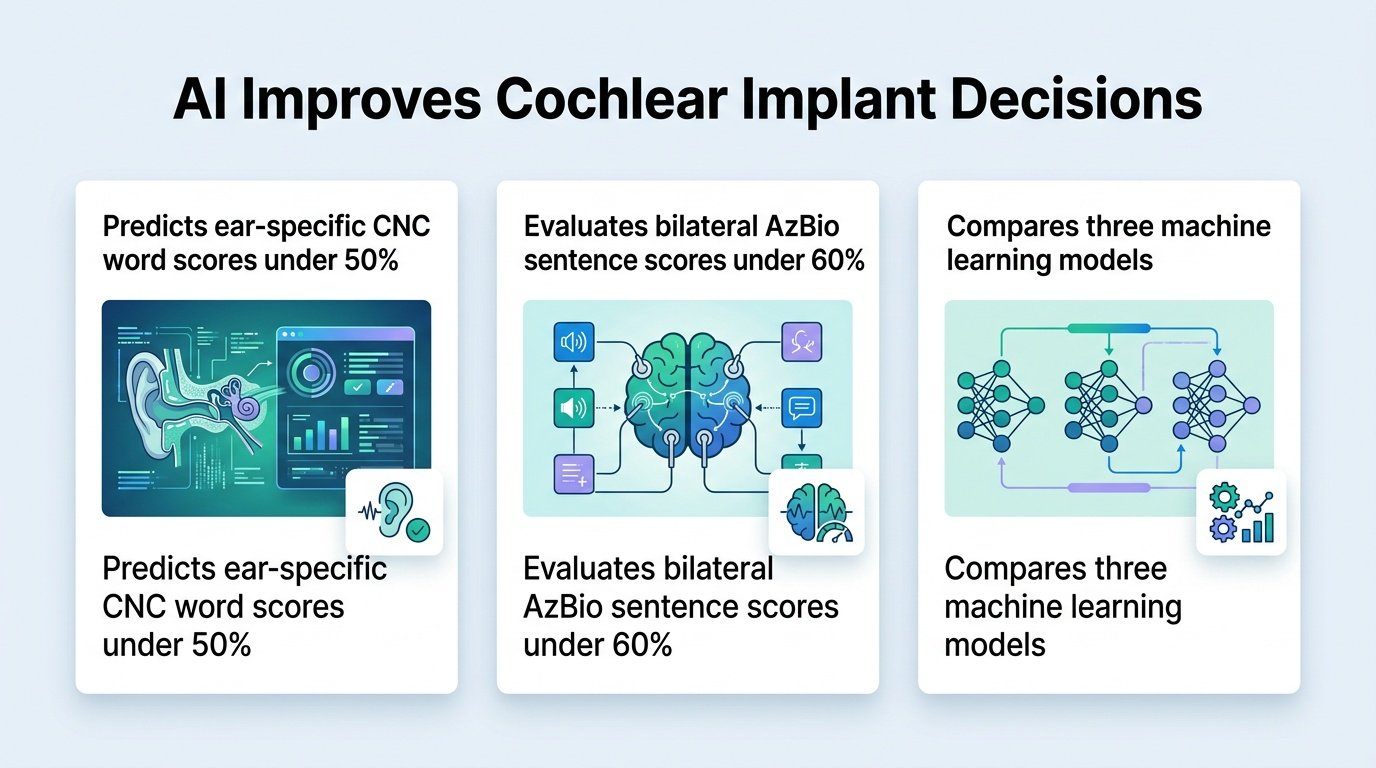
AI improves decisions for cochlear implant candidates
A new machine learning tool challenges the rigid, decades-old rule used to decide who qualifies for a cochlear implant.

A new machine learning tool challenges the rigid, decades-old rule used to decide who qualifies for a cochlear implant.
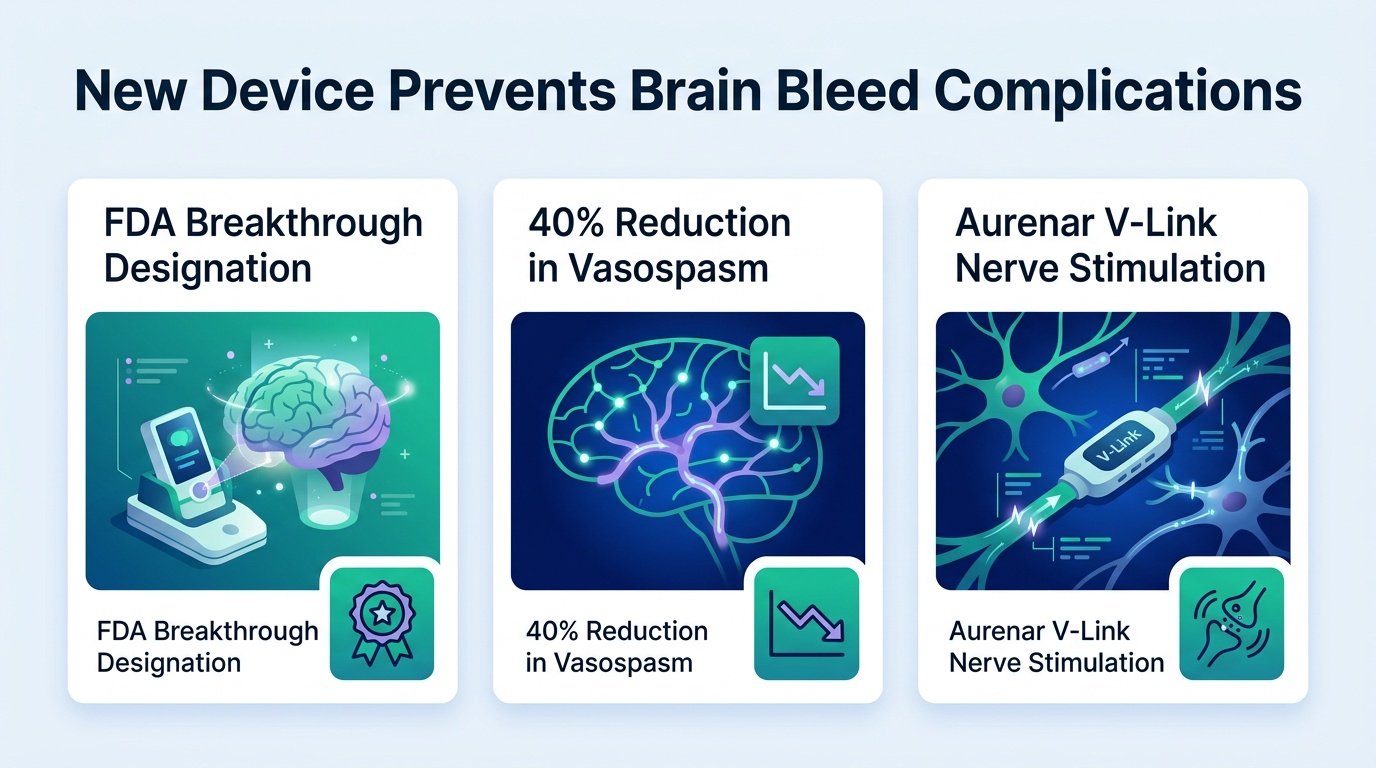
A non-invasive ear clip could replace risky brain surgeries for patients recovering from aneurysms.
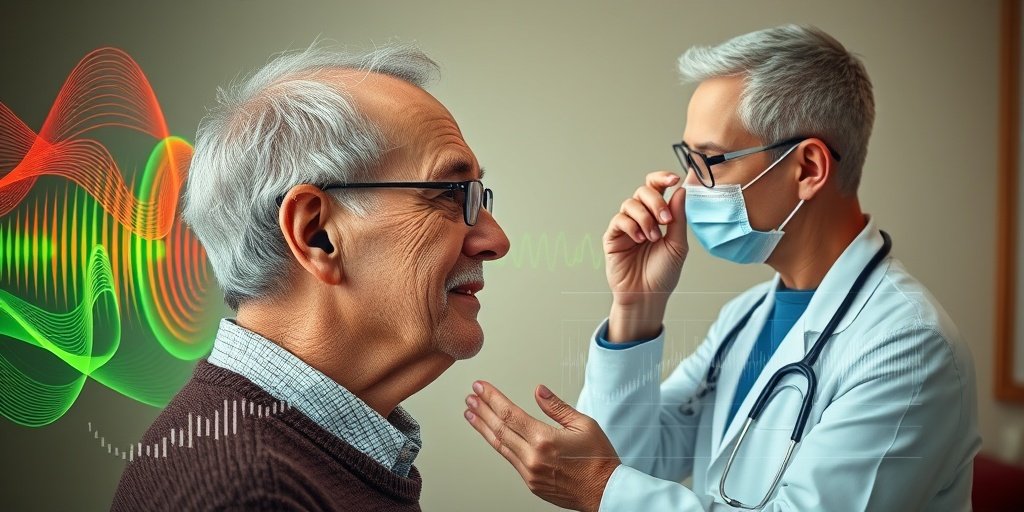
Deep neural networks enhance speech clarity and reduce listening effort in older adults with hearing loss. 📊👂

Neural network tool KLiP identifies listening issues in kids 3-6, achieving 90% sensitivity & 97% specificity! 🎧👶

AI predicts language growth in cochlear implant kids with 92.39% accuracy! 🤖📈 Key findings from PubMed article reviewed.
ChatGPT aligns with hoarseness guidelines: 86.7% consistency, 97.8% agreement among experts. Promising tool for voice disorder management! 📊🗣️
AI chatbots enhance hearing health outcomes; prompt design and model timeliness are crucial for effective communication. 🤖👂
Deep learning enhances hearing aids! 🎧 Study shows improved listening accuracy & reduced brain effort in users. 🧠✨

Exploring machine learning’s role in predicting vestibular diseases: a transformative approach for early diagnosis and personalized care. 🤖🩺
Parental insights on AI in childhood ear health reveal concerns and potential benefits. Key themes identified in recent study. 👂🤖