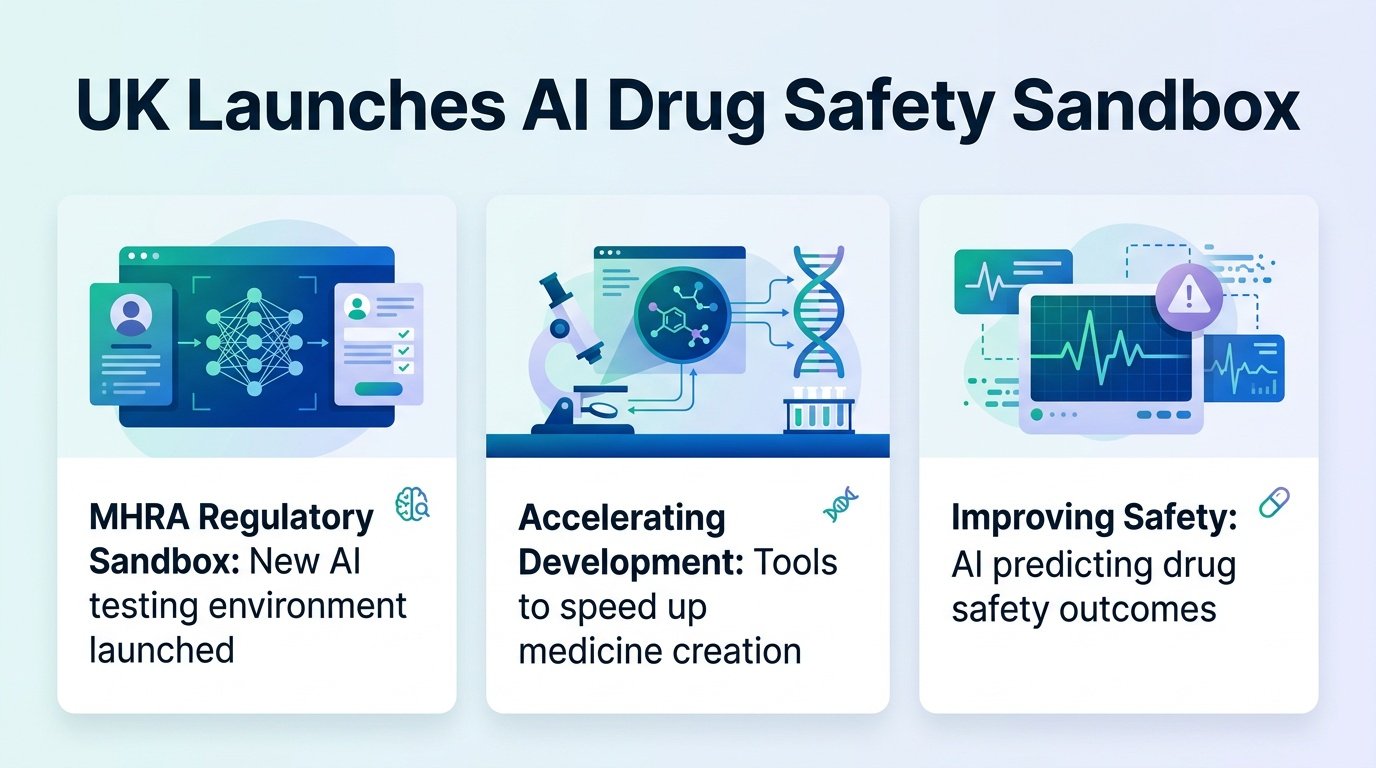
A new UK regulatory initiative is putting AI to the test to solve the pharmaceutical industry’s most expensive problem: high failure rates.
Nearly 90% of medicines fail during development. This staggering attrition rate drives up drug costs and leaves patients waiting years for treatments. Meanwhile, adverse drug reactions cost the NHS £2 billion annually. The Medicines and Healthcare products Regulatory Agency (MHRA) is launching a regulatory sandbox in summer 2026 to see if AI can predict drug safety before human trials even begin.
The safety sandbox
Backed by the UK’s Regulatory Innovation Office, the initiative will test up to five AI-driven approaches. The goal is to catch toxicities early, reduce reliance on animal testing, and better represent diverse patient populations in clinical data. But can algorithms truly replicate human biology?
Regulators are walking a tightrope. If they rely too heavily on predictive models, they risk missing subtle biological interactions that only appear in living systems.
The regulatory shift
This is not just about speed. It is a fundamental shift in how we define safety. By moving from reactive clinical trials to predictive virtual modeling, the MHRA is trying to build a modern regulatory framework. If successful, it proves that safety regulation can actively foster innovation rather than just police it. However, the true test lies in whether these AI models can consistently match the accuracy of traditional, albeit slow, testing methods. If they fail, the cost will be measured in human safety, not just lost R&D budgets.