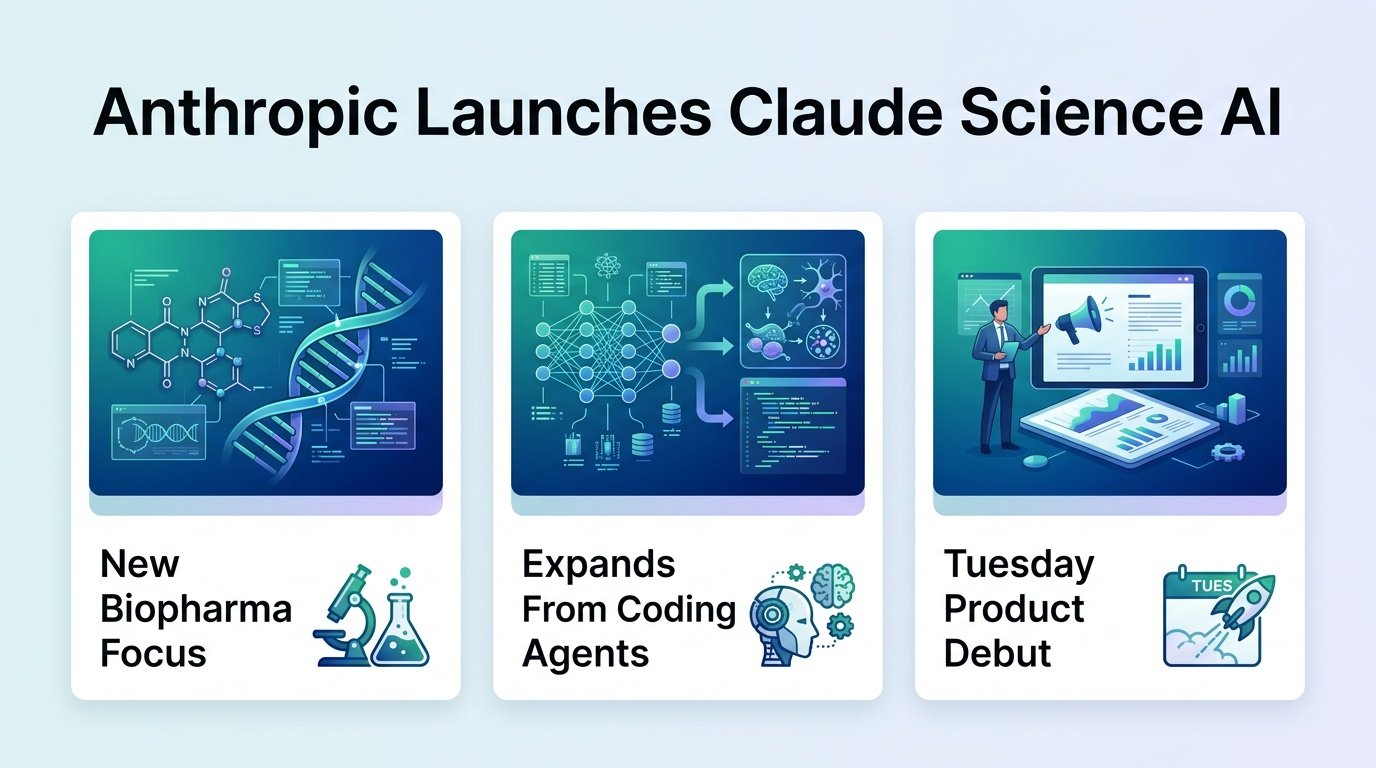
An AI giant is moving from writing software code to designing biological molecules, raising both commercial hopes and biosecurity alarms.
Can an AI model safely navigate the line between curing diseases and creating bioweapons?
Anthropic is betting its commercial future on this high-stakes boundary. The company just launched Claude Science, a specialized workbench that integrates over 60 scientific databases and renders 3D protein structures.
This is not just a software play. Anthropic is also launching its own pre-clinical drug programs targeting neglected diseases.
The Revenue Push
The timing is highly strategic. As Anthropic prepares for a planned initial public offering, it needs to prove it can generate massive enterprise revenue. Moving into biopharma is a logical step, but it exposes the company to intense regulatory and ethical scrutiny.
Biotech firms want powerful tools, but they also demand predictability.
The Biosecurity Risk
The dual-use nature of biological AI is a massive headache. CEO Dario Amodei has warned that advanced biological models could be exploited to engineer novel bioweapons.
To mitigate this, Anthropic is restricting access to vetted organizations.
But safety safeguards are notoriously difficult to maintain. The company has previously faced backlash for implementing invisible model downgrades to prevent misuse in chemical and biological research. These silent downgrades frustrate legitimate scientists who find their tools suddenly degraded.
If the AI is too restricted, researchers will abandon it for open-source alternatives. If it is too open, the biosecurity risks are catastrophic. Anthropic is walking a razor-thin tightrope between safety and profitability.