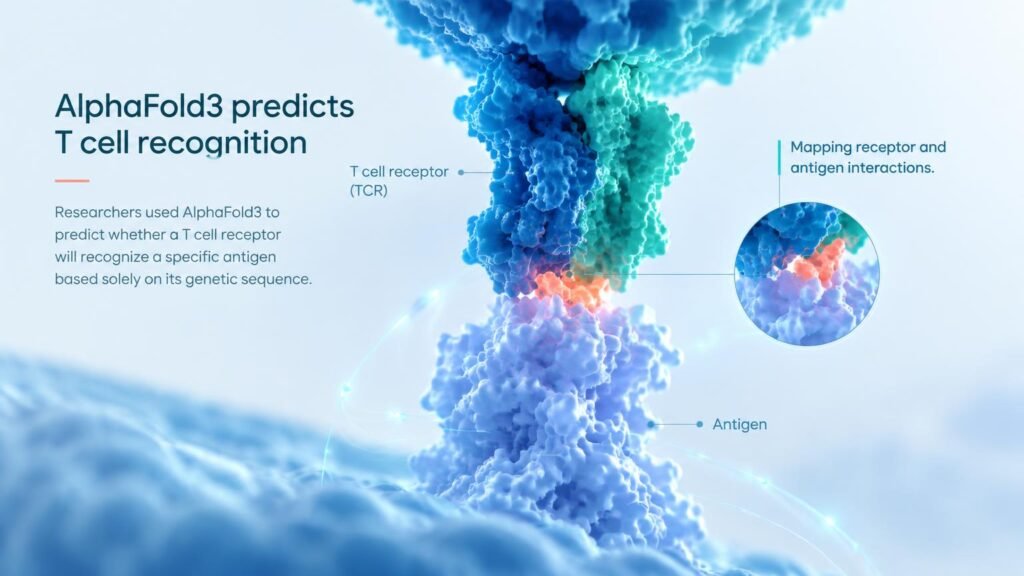
A new computational pipeline models T cell receptors to predict target antigens before lab validation begins.
Structural Intelligence
Predicting whether a T cell receptor will bind a specific antigen traditionally requires weeks of laborious cell assays. Sequence-only artificial intelligence models historically failed when encountering unfamiliar targets. By using AlphaFold3 to map physical interactions across 9,000 T cell receptors, a new analytical framework bridges the gap between raw genetic code and structural mechanics.
The workflow achieved AUC validation scores between 0.81 and 0.92 on target antigens unseen by the underlying model, including previously uncharacterized tuberculosis proteins.
Clinical Limits
High structural prediction accuracy does not equal proven therapeutic efficacy. Binding prediction serves as an early screening filter rather than a guarantee of immune activation in living patients.
This shift allows drug developers to filter candidate receptors computationally, cutting the initial timeline for personalized vaccine design before moving to mandatory wet-lab assays.