A new machine learning model flags life-threatening heart complications before standard clinical guidelines can spot them.
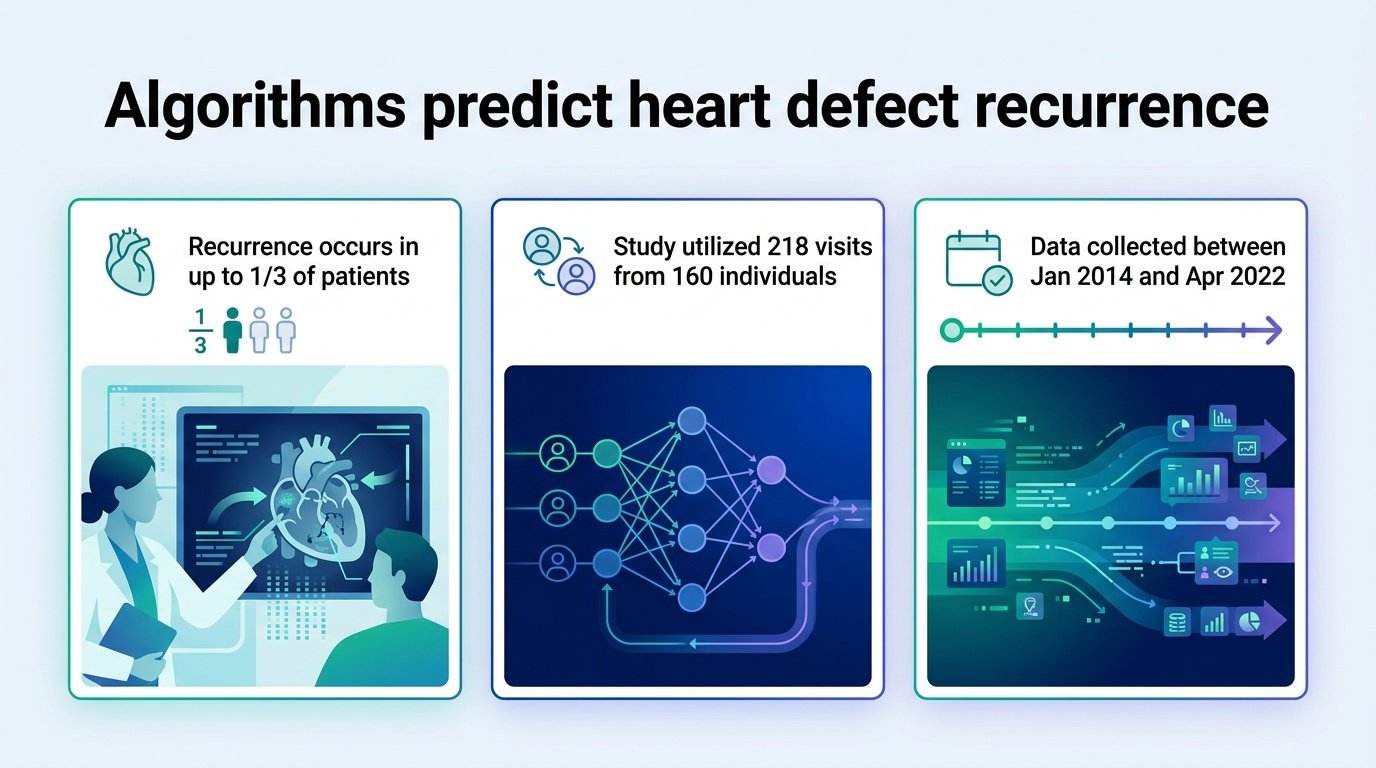
A young patient undergoes successful surgery for a constricted aorta, only for the vessel to narrow again years later. Up to one-third of patients with aortic coarctation face this recurrence, often suffering silent, permanent damage from high blood pressure. Standard clinical guidelines frequently miss the early warning signs of this rebound.
This reality challenges the reactive nature of current cardiac follow-ups. Instead of waiting for structural damage to show up on standard tests, algorithms can now synthesize complex imaging and history to predict failures before they happen. This shifts the clinical focus from monitoring damage to active prevention.
Researchers in Berlin built and validated these models using data from 218 clinical visits representing 160 patients treated between 2014 and 2022. They split the data into a training cohort of 159 visits and an out-of-sample test set of 59 visits. The models evaluated 38 clinical features, including cardiovascular magnetic resonance imaging, echocardiography, and medication history.
High accuracy in predictions
The tree-based and support vector models achieved high predictive accuracy across three critical endpoints:
- An area under the receiver operating characteristic curve (ROC AUC) of 0.90 ± 0.01 for predicting re-coarctation requiring intervention.
- An ROC AUC of 0.90 ± 0.01 for predicting the specific need for aortic surgery.
- An ROC AUC of 0.84 ± 0.01 for identifying persistent arterial hypertension.
The most compelling analytical takeaway is not just the high accuracy, but a specific drug association. The data showed that taking antihypertensive medication was associated with a 17.3% lower probability of needing another intervention. This suggests that aggressive blood pressure control does not just treat the symptom of hypertension. It may actively prevent the physical restructuring of the aorta itself.
This finding should make clinicians rethink how they prescribe these drugs. Rather than using medication simply to hit a target blood pressure number, doctors might use it as a preventative shield against physical vessel degradation.
Limitations and real-world use
However, the study has limitations. The models were trained on data from a single center in Germany, meaning they require broader validation across diverse global populations before widespread clinical adoption.
The researchers have already launched an open-access research interface to let clinicians test these personalized risk estimates. This tool could help doctors tailor follow-up schedules, reducing a patient’s lifetime exposure to dangerous upper-body hypertension.
Read the full study in EClinicalMedicine.