
Glioblastoma cells dynamically switch their movement strategies to evade standard cancer therapies.
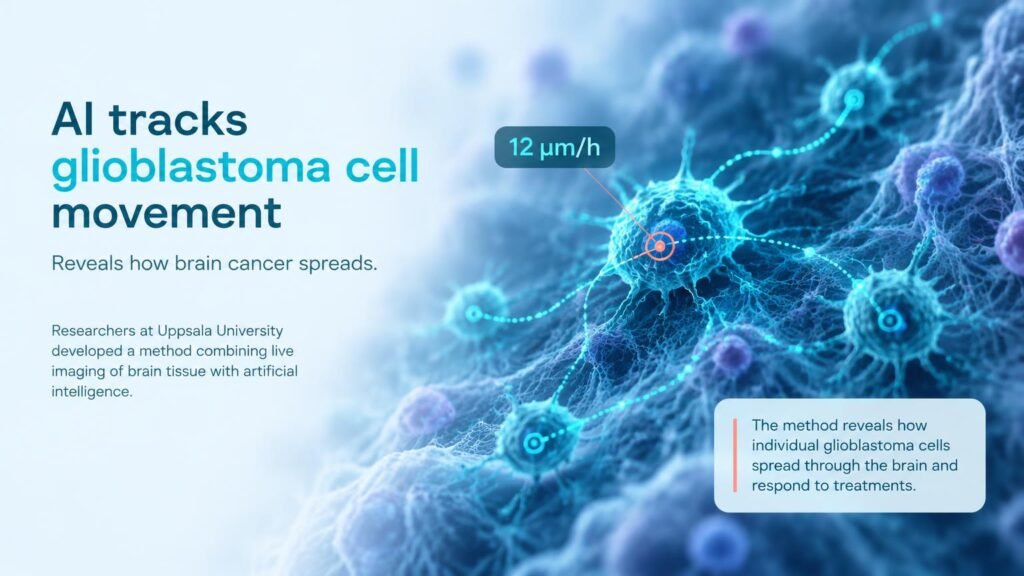
Targeting static genetic mutations in glioblastoma often fails because tumor cells adapt in real time. A new analytical platform, GlioTrace, combines continuous microscopic imaging of ex vivo brain slices with machine learning to monitor thousands of individual tumor cells over five days.
Tracking Invasive Tactics
The system revealed that glioblastoma cells do not move uniformly. Instead, they shift invasion tactics—migrating along blood vessels or spreading diffusely through healthy brain tissue—governed by specific cellular states and genes like ANXA1.
Understanding this adaptive plasticity shifts the diagnostic focus from static profiling to functional cell behavior. Rather than trying to kill fixed genetic targets, future interventions may need to lock tumor cells into non-invasive states.
Practical Limits
These findings rely on ex vivo brain tissue models. While real-time single-cell tracking provides unprecedented detail, ex vivo environments do not fully replicate complex human blood flow or immune system interactions in a live patient.
Translating these insights into clinical trial protocols will require validating whether drug candidates can successfully block state transitions in human subjects without causing neurotoxicity.