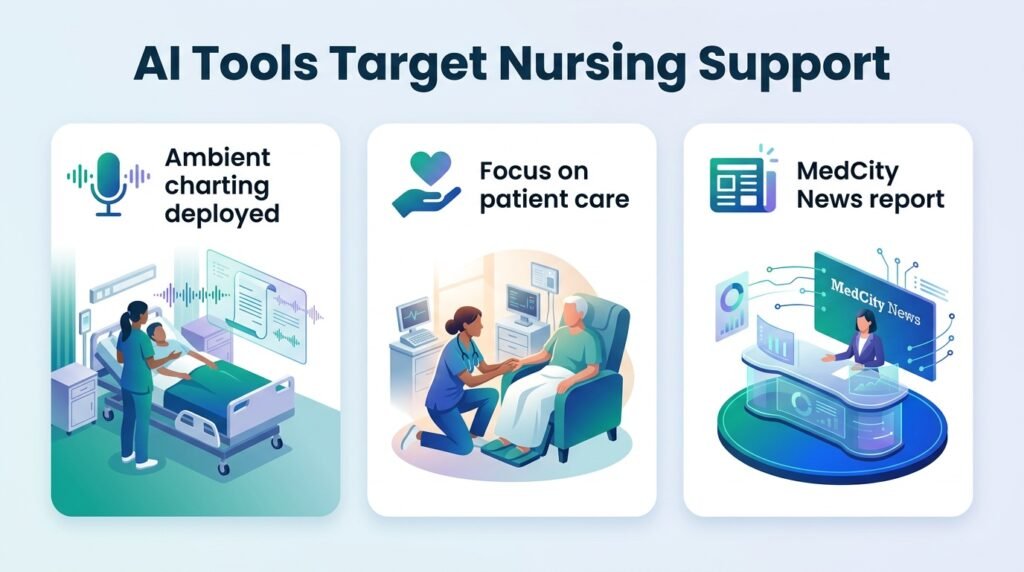
Hospitals are rushing to deploy ambient AI for nurses, but translating spoken words into rigid electronic flowsheets is a massive technical hurdle.
Nurses spend up to 40 percent of their shifts typing, clicking, and documenting. This administrative burden is a primary driver of clinical burnout. Now, major health systems are deploying ambient AI assistants to listen to patient interactions and automate the paperwork. Early pilots show a 20 percent reduction in charting time.
But there is a catch.
The Flowsheet Problem
Physician documentation is largely narrative. AI is highly capable of summarizing conversations into clinical notes. Nursing documentation is entirely different.
Nurses rarely write long narratives. Instead, they populate complex, discrete flowsheet fields within the electronic health record. They track vitals, wound care, and safety checklists in structured grids.
An AI cannot just summarize a conversation to help a nurse. It must be “chart-aware.” It must understand exactly where to place specific data points within a highly fragmented database.
The Integration Risk
Health systems like Penn Medicine, Mayo Clinic, and Cleveland Clinic are testing tools from vendors like Abridge and Ambience Healthcare. The technology is promising, but the implementation is exceptionally difficult.
If these tools cannot seamlessly inject data into flowsheets, they risk becoming just another fragmented technology layer. Nurses do not need another screen to monitor. They need tools that work invisibly.
The success of this rollout will not be measured by how smart the AI models are. It will be measured by how well the software navigates the rigid architecture of modern health records. If vendors fail this integration, ambient AI will merely shift the administrative burden rather than eliminate it.