Predictive algorithms are moving from administrative tools to clinical safety nets, flagging developmental risks before symptoms disrupt a child’s life.
Waiting for an ADHD diagnosis often means waiting for a child to fail. By the time a school or doctor notices the signs, years of academic struggle and social strain have already accumulated.
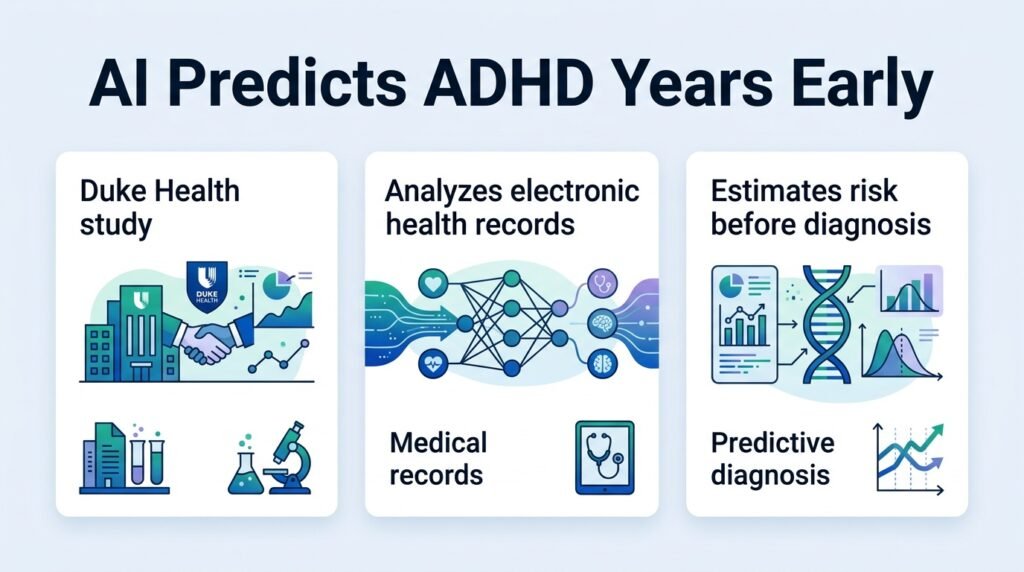
A new predictive model suggests this delay is preventable. By analyzing routine electronic health records of five-year-olds, the system predicted ADHD diagnoses between ages five and nine with 92% accuracy.
The Shift to Proactive Care
This is not about replacing pediatricians with algorithms. Instead, it represents a shift toward passive, automated screening.
The tool scans existing data to flag at-risk children during routine visits. This approach bypasses the traditional reliance on parents or teachers recognizing symptoms, which often leads to late interventions. Crucially, the model maintained its accuracy across diverse demographic groups. This could help bridge the gap in pediatric care disparities where minority children are often diagnosed much later.
The Limits of Prediction
However, data-driven screening introduces new complications. An algorithm flagging a child at age five raises ethical questions about labeling. Will teachers treat a high-risk child differently before symptoms even manifest?
There is also the risk of alert fatigue. If pediatricians are bombarded with automated risk flags, they may begin to ignore them.
The real-world value of early detection is clear. Early support correlates with higher GPAs and lower dropout rates. But the success of this technology depends on how clinics handle the transition from prediction to actual support.