Yusuf Yesil, MD, MIS
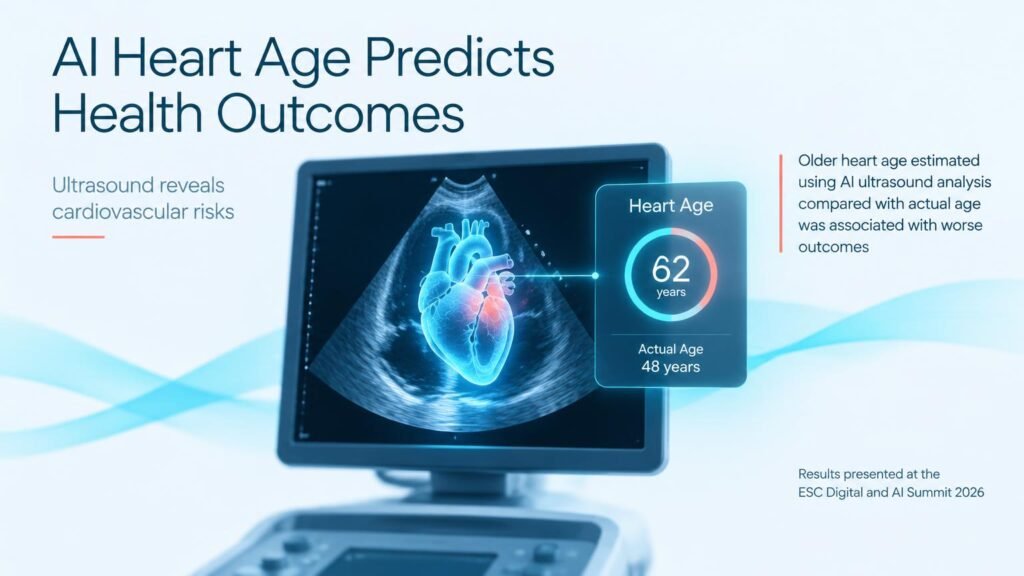
A 20-year retrospective study of 568 adults revealed that when an AI model estimates a heart to be older than a person’s actual age, the long-term stakes rise sharply. Every five-year gap between AI-estimated cardiac age and chronological age correlates with a 61% increase in long-term mortality from cardiovascular or dementia-related causes.
Beyond Traditional Risk Factors
Previous research linked accelerated heart aging to poor outcomes primarily in patients with existing heart disease. This new evidence extends that signal to a broader community cohort. It positions AI-derived cardiac age as a potential non-invasive biomarker for early physiological decline.
The Clinical Reality
Retrospective observational data does not prove that acting on an AI heart age score improves patient survival. Diagnostic signals often fail to translate into effective clinical interventions without prospective trial validation.
Until randomized trials prove that targeted therapies based on AI cardiac age actually lower mortality, health systems should view these algorithms as investigational tools rather than replacements for standard clinical judgment.