
Drafting target-binding molecules in hours does not bypass the physical lab work required to create a functional drug.
From Computation to Biology
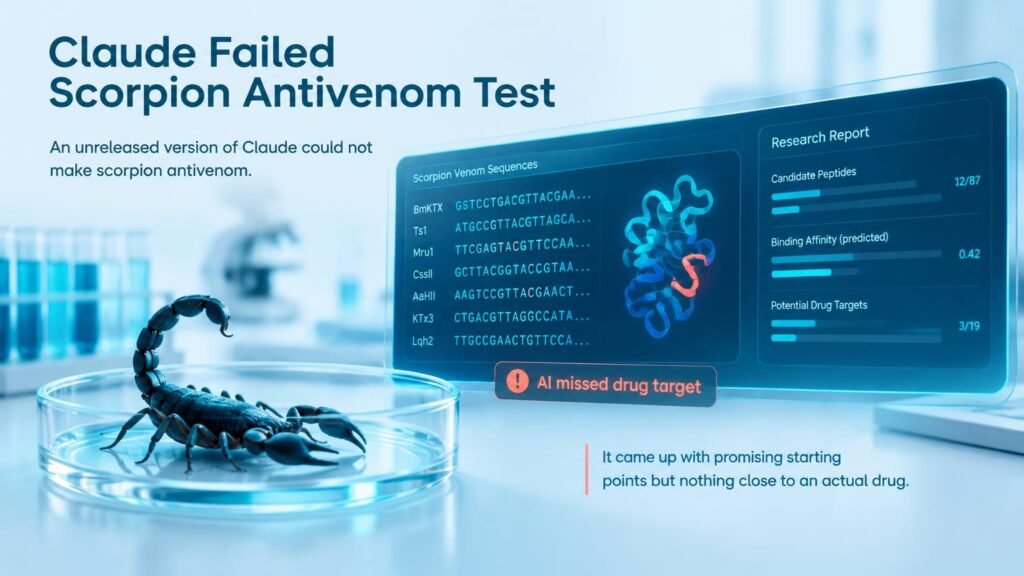
An autonomous AI system generated 318,000 protein candidates in 64 hours during a test aimed at treating scorpion stings. Subsequent lab testing showed that 17 designs successfully bound to the targeted neurotoxins.
The speed of initial candidate generation is striking. Yet candidate generation is not drug discovery.
Binding to a molecule in a dish is merely a preliminary milestone. None of the 17 candidates were proven to neutralize toxins in cell cultures or living animal models. The experiment produced computational starting points, not an actual antivenom.
The Wet-Lab Bottleneck
This outcome highlights a key reality in modern biotechnology. Algorithmic processing can drastically reduce the time needed to draft potential therapeutics. However, physical wet-lab validation remains the absolute bottleneck.
Proving safety, efficacy, and real-world neutralization requires rigorous biological testing. These physical steps cannot be compressed into a multi-hour computer run.
Non-expert operators may now use large models to propose candidate structures. But until synthetic candidates survive live tissue trials, algorithmic output remains an unverified hypothesis rather than a medical solution.
Healthcare leaders evaluating these platforms must separate candidate creation from clinical readiness. Investing heavily in automated design without matching capacity in wet-lab validation will only create an expensive backlog of untested molecules.