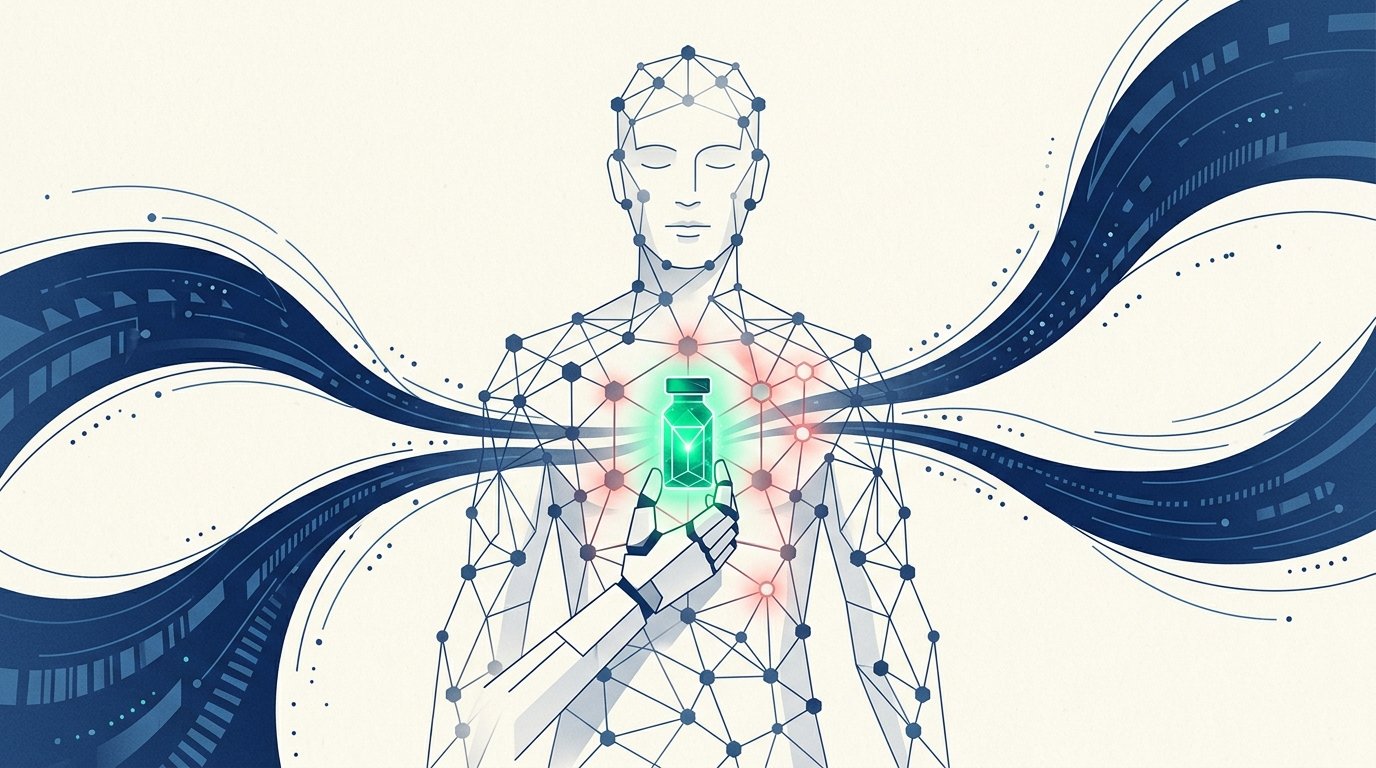
A vaccine designed by machine learning just cleared its first human trial, but the real test lies in overcoming our own immune histories.
The dream of a single vaccine to stop all coronaviruses before they spill over from animals is no longer science fiction. But the first clinical data reveals a complex biological hurdle that algorithms cannot easily solve.
The AI Strategy
Instead of chasing mutating spike proteins, researchers used machine learning to find a stable “super-antigen” shared across the entire Sarbecovirus family. This AI-selected target was delivered via a needle-free jet injection to 39 healthy volunteers.
The trial proved the vaccine is safe.
However, the biological reality was messy. The immune response was modest and did not scale predictably with higher doses.
Why? Because our bodies are not blank slates.
The Pre-Existing Barrier
Most humans now carry complex immune memory from prior COVID-19 infections or vaccinations. This pre-existing immunity likely interfered with how volunteers processed the new vaccine.
This highlights a critical limit for predictive AI in medicine. An algorithm can design a perfect molecular key. But it cannot control the rusty, pre-worn locks of the human population.
If universal vaccines are to succeed, developers must design for dirty data and pre-exposed immune systems, not just clean lab models. The pipeline is already being adapted for influenza and Ebola. But until we solve the dosing puzzle in pre-exposed populations, the universal shield remains just out of reach. The upcoming Phase 2 trial will need to prove that this machine-learning approach can overcome the noise of human biology.