
The promise of automated medical coding is colliding with the reality of runaway healthcare costs.
AI was supposed to streamline administrative waste. Instead, it is supercharging a financial arms race between hospitals and insurers, with patients and employers caught in the crossfire.
The Upcoding Arms Race
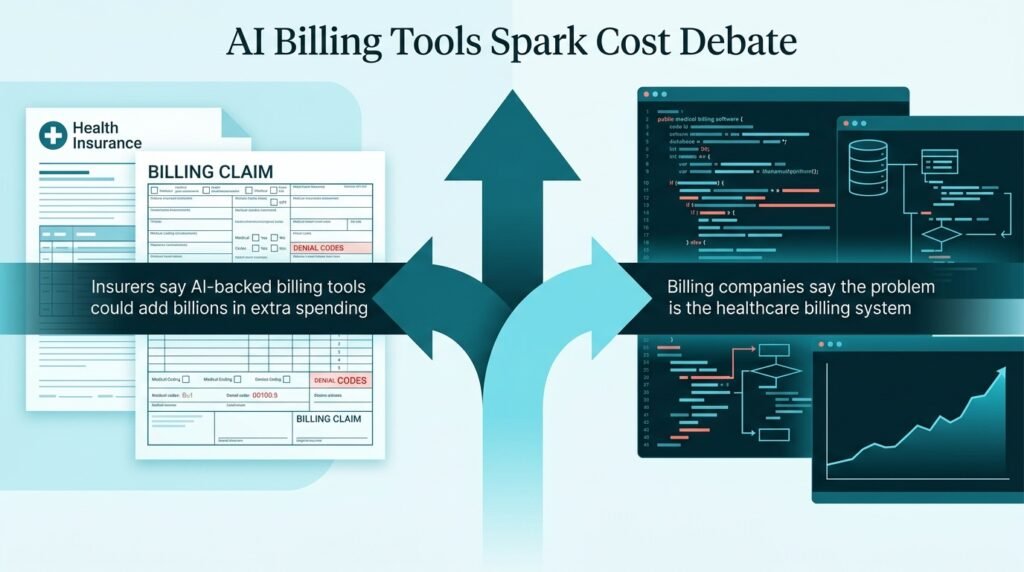
A recent analysis revealed that AI-assisted hospital coding tools added $942 million in unwarranted costs over just two years. The software achieved this by flagging minor, secondary diagnoses to upcode claims. Crucially, actual patient care did not change at all. The technology simply found new ways to describe the same treatment for more money.
This is not an isolated glitch. Projections suggest a 9% spike in 2027 healthcare costs, with AI billing flagged as a primary driver. Hospitals now deploy algorithms to maximize their reimbursements. In response, insurers use their own algorithms to audit and deny those same claims. It is machine fighting machine, and the bill keeps growing.
A Systemic Glitch
Billing companies argue the technology is not at fault. They claim the software simply navigates an incredibly complex system. But when software is optimized to find every billable penny, inflation is inevitable.
Regulators are starting to notice. New Hampshire is introducing legislation to restrict insurers from using AI to override clinical coding judgments. However, policing the software does not fix the underlying incentives. Until the industry changes how it rewards volume over value, AI will remain a tool for financial extraction rather than administrative efficiency.