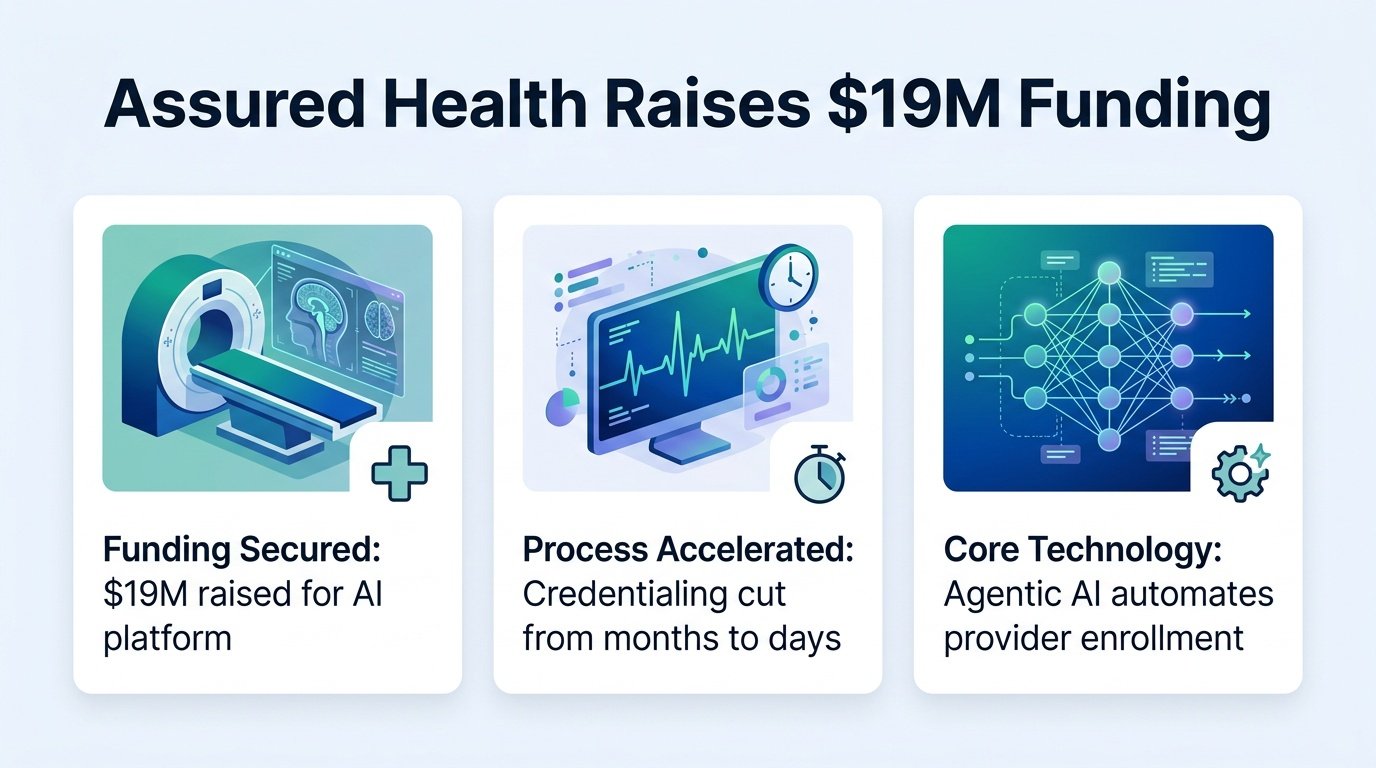
Automating insurance enrollment could solve one of medicine’s most expensive waiting games, but AI agents must first prove they can handle the regulatory minefield.
Every day a newly hired doctor sits idle waiting for insurance credentialing, a health system loses thousands of dollars. The traditional process is a notoriously slow, manual slog of verifying degrees, licenses, and histories against thousands of databases.
Now, technology is shifting from passive tracking software to autonomous AI agents that can bypass this administrative gridlock entirely.
The Cost of Waiting
Getting a provider in-network historically takes months. By deploying autonomous agents to verify data against more than 2,000 primary sources, new systems can shrink this timeline by 30 percent.
A recent $19 million funding round for credentialing startup Assured Health highlights how eager investors are to solve this specific bottleneck. The goal is to turn a multi-month bureaucratic nightmare into a process that takes mere days.
For health systems, the financial incentive is massive. Faster credentialing means getting clinicians into exam rooms and billing insurers weeks ahead of schedule.
The Trust Hurdle
Yet, autonomous administration carries distinct risks.
Insurance enrollment is a zero-tolerance environment. A single hallucinated credential or missed disciplinary record can trigger severe compliance penalties or lawsuits.
While early adopters like Houston Methodist are testing these agentic workflows, widespread adoption hinges on absolute accuracy. AI developers must prove their agents can handle messy, unstructured state registry data without human oversight. For now, human-in-the-loop verification remains a necessary safety net.