
New AI flags childhood diseases before doctors do
A new multi-agent AI system can spot chronic pediatric diseases months before clinicians notice abnormal growth patterns, but its cautious design means many sick children will still be missed.
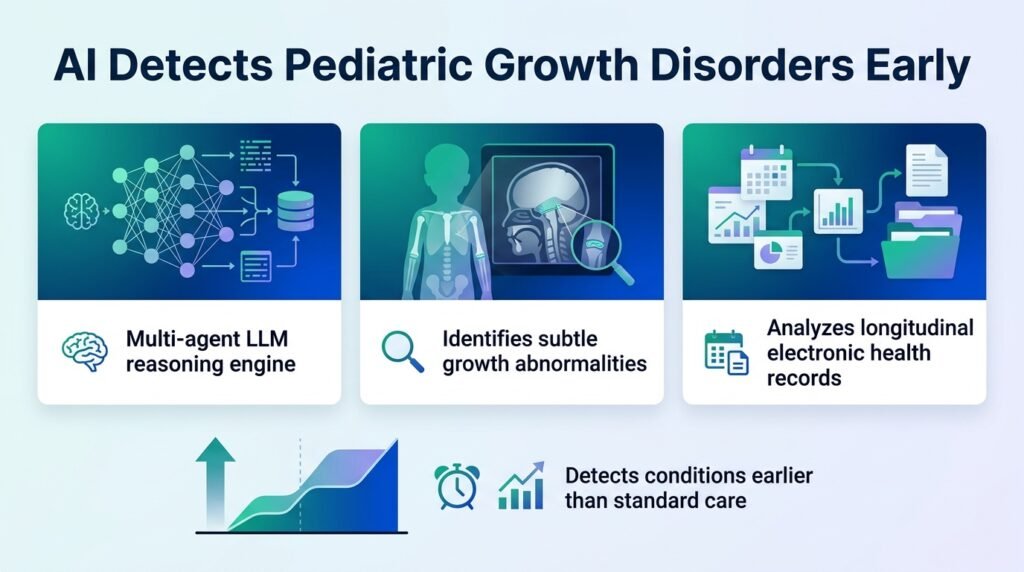
Pediatricians regularly miss the subtle shifts in growth charts that signal chronic illness. By the time a child is diagnosed with celiac disease or type 1 diabetes, they may have suffered months of avoidable harm. SPROUT, a new multi-agent AI system, aims to close this gap by analyzing longitudinal electronic health records.
But instead of the usual screening approach that floods doctors with false alarms, this system prioritizes extreme caution. This design choice challenges the standard medical AI playbook of flagging every possible risk. SPROUT opts instead to be a quiet, highly reliable safety net.
An AI panel of specialists
The system uses a two-stage setup to analyze patient records. First, a screening model flags suspicious growth trajectories. Then, an orchestrator coordinates a panel of virtual AI specialists to debate and rank potential diagnoses. A training module even injects clinical feedback to correct reasoning errors over time.
High accuracy, low sensitivity
In simulations, the screener proved exceptionally quiet when patients were healthy. One year before diagnosis, the system achieved **98%** specificity (83 out of 85 patients), which rose to **100%** on the actual day of diagnosis. However, this came at a cost to sensitivity, which was just **28%** (9 out of 32 patients) one year out and **47%** on the diagnosis day.
When tested on 300 healthy control patients, the screener flagged only 15 children. Upon expert review, doctors confirmed that **33%** (5 out of 15) of those flagged patients actually had undiagnosed pathologies. For specific conditions, the diagnostic engine showed varied performance one year prior to clinical detection:
- **81%** sensitivity for type 1 diabetes mellitus
- **56%** sensitivity for pituitary disorders
- **44%** sensitivity for celiac disease
The cost of caution
This lopsided performance reveals a deliberate clinical trade-off. In primary care, alert fatigue is a major driver of physician burnout. By keeping specificity near perfect, SPROUT ensures that when it does alert a pediatrician, the warning is highly likely to be real.
Yet, we must not overlook the fact that the system missed more than half of the celiac and pituitary cases a year early. SPROUT is not a replacement for clinical vigilance, but rather a targeted backstop for the most obvious missed trajectories.
This shifts how we should judge clinical AI.
Success should not be measured by how many cases an algorithm can find in a vacuum, but by how cleanly it integrates into a noisy clinic. If an AI is too noisy, doctors simply turn it off.
Read the full study in medRxiv.